Donald Trump Foreign Policy record remains one of the most controversial aspects of his political legacy. Across both of his presidencies, Trump frequently portrayed himself as a leader determined to end “endless wars” and prioritize American interests. At the same time, his aggressive rhetoric, confrontational diplomacy, and willingness to use military force raised concerns among critics who viewed his actions as destabilizing.
From tensions with Iran and Syria to confrontations involving Venezuela and even the unexpected proposal to acquire Greenland, Trump’s approach often blurred the line between deterrence and provocation.
Donald Trump Foreign Policy Doctrine: America First
At the core of Trump’s international strategy was the “America First” doctrine. This approach emphasized national sovereignty, economic leverage, military strength, and skepticism toward multinational agreements and alliances.
Trump argued that previous U.S. administrations had overextended American military power abroad while neglecting domestic priorities. Supporters viewed his doctrine as a corrective measure, while critics argued it weakened alliances and increased global uncertainty.
Key characteristics of this approach included:
_ Preference for unilateral decision-making
_ Reliance on economic sanctions and pressure
_ Emphasis on military deterrence
_ Rejection of long-term nation-building missions
Trump’s First Presidency (2017–2021): Pressure Without Prolonged War
Syria: Limited Military Strikes
Syria was one of the most visible arenas of Trump’s foreign policy. Although he criticized U.S. involvement in Middle Eastern conflicts, Trump authorized targeted missile strikes following alleged chemical weapons incidents.
These strikes were limited in scope and framed as deterrent actions rather than steps toward regime change. While critics warned of escalation with Russia and Iran, the administration avoided broader military engagement.
Iran: Maximum Pressure Strategy
Trump’s Iran policy represented a significant shift from previous administrations. The U.S. withdrew from the nuclear agreement and implemented a maximum pressure campaign through sanctions and diplomatic isolation.
Tensions escalated through regional incidents and cyber operations, culminating in the killing of Iranian General Qasem Soleimani in 2020. Despite widespread concern over potential war, the conflict did not escalate into direct military confrontation between the two countries.
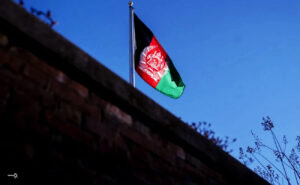
Afghanistan: Negotiating an Exit
Trump repeatedly expressed a desire to withdraw U.S. forces from Afghanistan. His administration entered negotiations with the Taliban, aiming to reduce American military involvement.
Supporters saw this as evidence of genuine anti-war intent. Critics argued the process weakened Afghan institutions and lacked sufficient safeguards. Nevertheless, Trump resisted calls for troop surges, reinforcing his reluctance toward prolonged warfare.
Venezuela: Sanctions, Rhetoric, and Military Threats
Trump’s policy toward Venezuela involved heavy economic sanctions, diplomatic pressure, and open support for political change. Statements suggesting that military intervention was possible sparked global concern.
However, no direct military action occurred. Instead, the strategy relied on economic leverage and international pressure, highlighting a recurring pattern of strong rhetoric paired with restrained military action.
Greenland Proposal: Strategic Thinking or Diplomatic Misstep?
Trump’s suggestion that the United States purchase Greenland drew international attention and criticism. While the proposal was never pursued, it reflected Trump’s transactional view of foreign relations.
Some analysts saw the idea as symbolic of expansionist thinking, while others interpreted it as an unconventional but nonviolent strategic concept.
Trump’s Second Presidency: War Scalation with Iran amid ambiguous goals
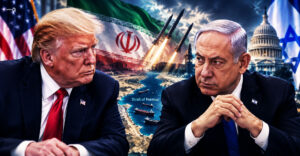
Donald Trump started the war with Iran with the aim of destroying Iran’s military and nuclear capabilities. But many analysts believe that the reason Trump entered the war directly was due to the great pressure from Benjamin Netanyahu and the escape from the Epstein Files! Trump talks about victory and the destruction of the Iranian navy, but still no oil tanker, not even American ships, dare to pass through the Strait of Hormuz, and American bases in the region have been destroyed by Iranian missiles under severe Western media censorship.
Moreover, Trump categorically denies US war crimes and brutal and deliberate attacks on civilians, especially children at the Minab school, and despite the confirmation by Western media that this attack was definitely carried out by the US, he claims to be unaware of the details.
The New York Times, by examining satellite images from Planet Labs and verified videos, showed that the American missile deliberately hit the school building and destroyed it. Analysts have considered the pattern of this destruction consistent with attacks caused by precision-guided munitions. The newspaper also rejected Donald Trump’s claim that Iran was involved, pointing out that the Tomahawk missiles were specifically for the US military.
The BBC, reviewing the same images, also noted the presence of numerous explosion craters and burn marks in the school building, indicating that several missiles were hit in rapid succession and deliberately.
The Guardian, reconstructing the events based on verified videos and analyzing intelligence sources, concluded that the location of the school, the time of the attack, and the smoke from the explosions in nearby buildings all confirm that the school was deliberately targeted in a wide wave of attacks.
Economic and Energy Consequences of Global Tensions
Foreign policy decisions involving major powers and energy-producing regions often have significant economic consequences. The Middle East plays a critical role in global energy markets, meaning that political instability can quickly influence oil prices and international trade.
When tensions increase in the region, markets often respond with uncertainty. Higher energy prices can affect transportation, manufacturing, and household costs around the world. As a result, conflicts involving key energy producers can have ripple effects across the global economy.
Economic sanctions also carry consequences. While they are intended to pressure governments, they can affect entire populations and reshape trade relationships between countries. Businesses, investors, and governments must all adapt to the new economic realities created by such policies.
There could be three other global impacts of the war:
1. The recent war has affected the world’s major fertilizer exporters
According to the Observatory of Economic Complexity, Oman, Qatar, Saudi Arabia and the United Arab Emirates are the four largest exporters of nitrogen fertilizer. This type of fertilizer is produced from natural gas and is used in agricultural products to produce about half of the world’s food.
Although most fertilizer producers in the region have continued to produce despite the war, Qatar Energy, a major urea producer, has suspended production due to Iranian missile and drone attacks.
In addition, fertilizer companies that have continued to operate are unable to export their products due to the closure of the Strait of Hormuz, and as a result, they are making limited profits. According to Bloomberg, the Strait of Hormuz is the route through which a third of the world’s fertilizer passes.
It should also be noted that Iran is also an exporter of agricultural fertilizers, as well as China’s decision to stop exporting phosphate fertilizers by the end of 2025 and limit urea exports until August 2026 in an effort to support domestic farmers. Food production at risk.
2. Restrictions on global drug distribution
The war in the Middle East will also affect the supply chain and distribution of drugs and pharmaceutical products. This is mainly due to the attacks on Dubai, one of the main centers for the distribution of pharmaceutical products in the world. The most populous city in the United Arab Emirates is home to the world’s busiest airport, which will handle about 95 million passengers in 2025.
The airport is also an important distribution center for drugs and pharmaceutical products, especially those that require cold storage. The airport is particularly important for the Indian pharmaceutical industry because, according to the Indian Ministry of Commerce, the country is the largest supplier of generic drugs and produces 60% of the world’s vaccines.
3. Production of metals, chemicals and electronic devices
The distribution of chemical elements such as sulfur and raw materials such as aluminum, which play a fundamental role in industrial production, has not been immune to the impact of the war. Countries such as Saudi Arabia, the United Arab Emirates, Qatar, Kuwait and Iran are among the countries that export sulfur, a by-product of oil and gas refineries.
According to the United States Geological Survey, 24% of the world’s sulfur production comes from the Middle East. Most of this product is used in chemical fertilizers, but it is also used in the extraction of minerals and metals such as copper and nickel, which are essential for the production of appliances and devices, vehicles, electrical networks, semiconductors, batteries and materials such as stainless steel and many other materials.
The impact of the war is also tangible in this area. During the first week of the war, nickel producers in Indonesia, which produces 50% of the world’s nickel, announced that they had halted production due to disruptions in shipments from the Gulf countries, which supply about 75% of the sulfur they need.
Some copper producers in Africa are facing a similar situation, according to Reuters. “The shortage of raw materials pits Indonesia’s nickel refiners against African copper miners and against fertilizer producers around the world, all of whom are looking for alternatives to Middle Eastern sulfur,” Reuters wrote.
Sulfuric acid, which is made from sulfur, is a key ingredient in semiconductors and chips. Disruptions to the production and distribution of this chemical would have severe consequences for the production of countless products that are essential to modern life. Products like. smartphones, computers, memory cards, vehicles, and countless other electronic devices used in homes, workplaces, and factories.
This is not the first time the world has faced such a situation. During the Covid-19 pandemic, chip shortages affected the mass production of devices and appliances, increasing the final price that consumers had to pay. This time, we must also consider the high demand for chips from manufacturing companies and the use of artificial intelligence models.
Peacemaker or Conflict Escalator? The big liar cannot be trusted again
Donald Trump foreign policy is really shaking. Recently, Trump once again backed down on his threats against Iran. He also claimed to have had constructive talks with Iranian representatives, something the Iranian Foreign Ministry has strongly denied.
This is the second retreat by Trump that has almost turned him into a lying shepherd. Once, he promised to escort ships from different countries and said not to worry. But he retreated and again, he retreated on the oil embargo and the sanctions that they had imposed decisively and unwaveringly against the Iranian nation since 2018 were set aside for the sake of the energy market and announced that they would temporarily lift the sanctions on Iranian oil, which itself disrupts the sanctions structure.
Donald Trump backed down for the third time when he attacked Assaluyeh and caused problems in some of the phases of South Pars, and Iran responded decisively, and that was a response to part of the energy infrastructure of the region in which the Americans have a stake or guarantee their interests, and Donald Trump announced that he was not aware of this and that it was the work of the Israelis.
And today he backed down from attacking the country’s electricity infrastructure, when Iran gave a technical and equal response in the area of threats, and that it did not fail to respond to the attacks of the different phases of Operation True Promise 4, and this issue caused Trump to back down, and this issue has other reasons as well.
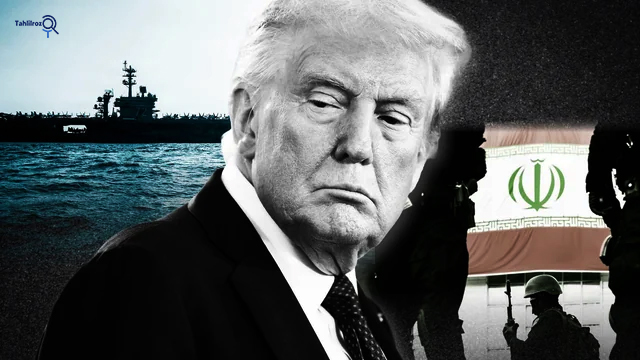
Iran will decide the end of the war
Since the first day that Iran has controlled the Strait of Hormuz, about a third of the region’s oil production has been disrupted, which is a third of 20 percent. Because Iran provides 20% of the world’s energy supply in the field of oil, gas and gas condensate in the Persian Gulf and its countries, and one-third of oil production has been disrupted.
This behavior by Trump is a clear example of “hybrid warfare”; a combination of bombs, media threats, assassinations and simultaneous invitations to negotiations.
In fact, the purpose of bringing forward the discussion of fake negotiations is to create bipolarity within Iran and reduce the alertness of the armed forces in a period of 5 days. But the reality is that these fictitious media games will not have an impact on the reality of Iran’s energy production and battlefield readiness.
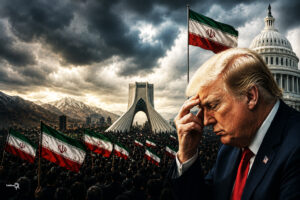
Donald Trump Foreign Policy is full of lies and failures and Trump is known for lying. Iran currently has significant control over the war. Almost none of the initial goals of the US and Israel in this war have been achieved, and Trump is struggling to get out of the quagmire in which he is trapped. The ultimate winner of this war will be the promise of God.
Mohsen Shahrafiee