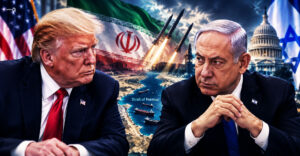
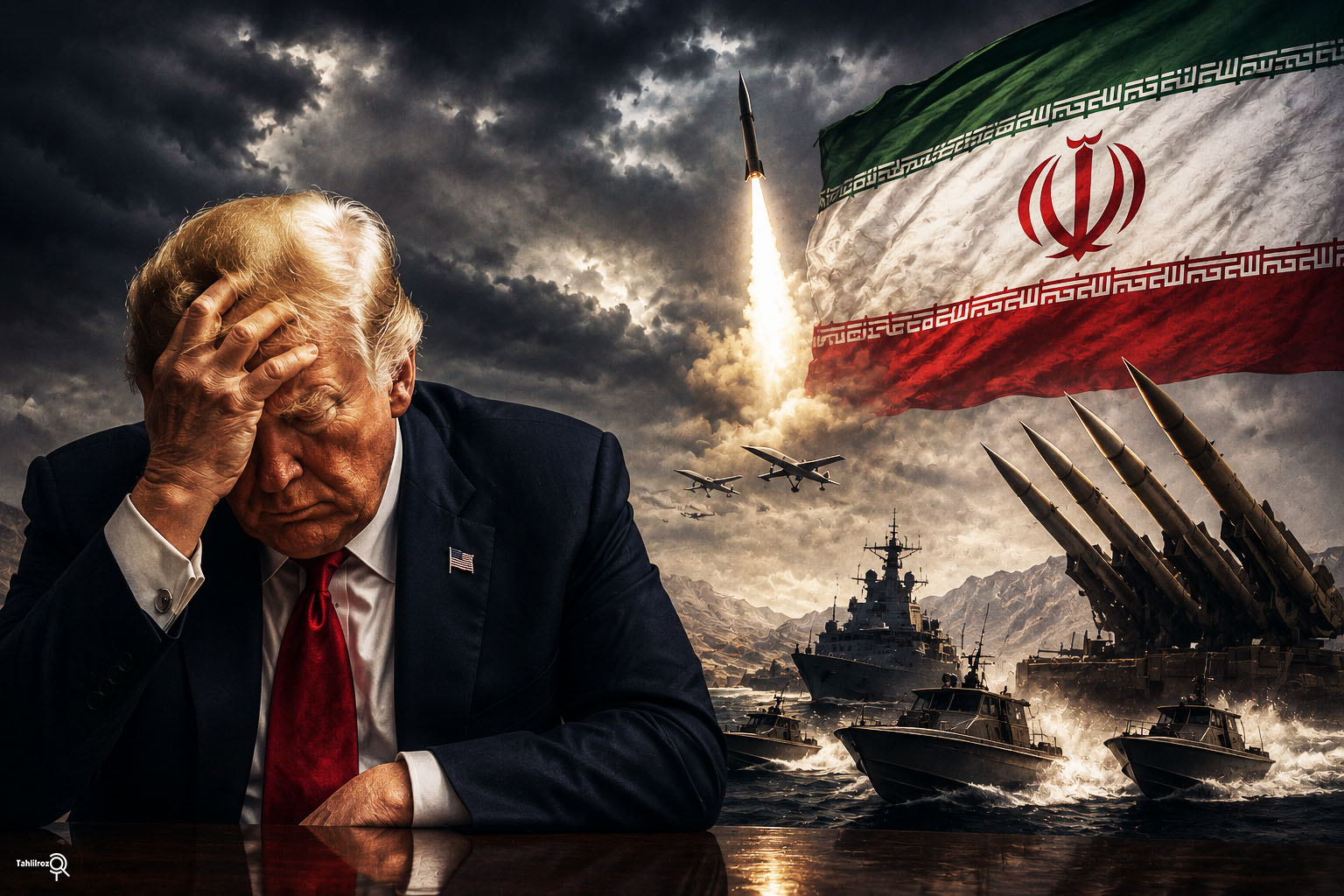
When U.S. President Donald Trump declared that Iran’s military capabilities had been “destroyed,” the statement immediately sparked international debate. Trump and several American officials repeatedly claimed that Iran’s navy had been “annihilated,” its missile infrastructure crippled, and its ability to threaten the region effectively neutralized.
However, events unfolding in the Persian Gulf and the Strait of Hormuz suggest a far more complicated reality. Despite suffering heavy damage from U.S. and Israeli strikes, Iran has continued launching missile and drone attacks, maintaining regional deterrence, and exerting influence over one of the world’s most critical maritime chokepoints: the Strait of Hormuz.
The evidence indicates that Iran remains a significant military and geopolitical force — one capable of disrupting global energy markets, threatening maritime trade, and responding asymmetrically even after extensive military pressure.
Irans Military Was Damaged — But Not Destroyed
There is little doubt that Iran suffered major military setbacks during the recent conflict. Reports from Western analysts acknowledged that many Iranian naval vessels, missile facilities, and air defense systems were targeted. U.S. officials even claimed that large portions of Iran’s conventional naval fleet had been destroyed.
But destroying military hardware is not the same as eliminating military capability. Independent assessments and military analysts have repeatedly pointed out that Iran continues to possess operational missile systems, drones, underground weapons infrastructure, and asymmetric warfare capabilities. In fact, fact-checking investigations challenged Trump’s assertion that Iran’s military had been completely eliminated.
According to analysts cited by PolitiFact, Iran continued launching missiles and drones even after claims of “total destruction” were made. Experts emphasized that as long as Tehran could still strike targets and threaten strategic waterways, it retained meaningful military leverage.
CBS news questioned Donald Trump’s claim that Iran’s navy and air force had been destroyed, saying they were untrue. Trump claimed: “They don’t have a navy, an air force, an air defense, they don’t have any other capabilities.” CBS continued: “But reports show that Iran still has significant military capabilities.”
According to several American officials, the Iranian armed forces still have 60 percent of their naval capabilities, while more than half of Iran’s ballistic missiles and launchers are still available. The officials also said that it is estimated that about two-thirds of Iran’s air force is still operational.
This distinction is crucial. Modern warfare is no longer defined only by tanks, fighter jets, or large warships. Iran’s military doctrine has long focused on asymmetric warfare — using mobility, missile saturation, drones, fast attack craft, cyber capabilities, and underground bases to offset the technological superiority of its rivals. That strategy appears to have survived intact.
The Strait of Hormuz: Iran’s Greatest Strategic Advantage
The strongest evidence that Iran remains powerful lies in the Strait of Hormuz itself. Strait of Hormuz is arguably the world’s most important energy chokepoint. Roughly one-fifth of global oil shipments pass through this narrow waterway. Any disruption there immediately affects global energy prices and international trade.
Despite claims that Iran’s navy had been destroyed, the United States and its allies continued expressing serious concern about Tehran’s ability to threaten or block the strait. Multiple reports confirmed that Iran maintained enough missile, drone, and naval capability to create major disruptions in maritime traffic.
In fact, the U.S. launched “Project Freedom” specifically to reopen and secure maritime navigation through the Strait of Hormuz after Iranian actions disrupted commercial shipping. If Iran’s military had truly been “destroyed,” such an operation would likely have been unnecessary.
The very existence of emergency naval escort missions demonstrates that Tehran still possesses enough military power to threaten global shipping routes and force major powers into defensive responses.
Asymmetric Warfare: Iran’s Real Military Doctrine
Western military analysts often evaluate military strength through conventional metrics such as aircraft carriers, fighter jets, and advanced naval destroyers. But Iran has never attempted to compete with the United States on those terms.
Instead, Iran built a strategy centered around asymmetric warfare.
This includes:
- Underground “missile cities”
- Mobile ballistic missile launchers
- Swarm drone attacks
- Fast attack boats
- Coastal anti-ship missiles
- Proxy networks across the Middle East
- Electronic warfare and cyber capabilities
Even after extensive bombing campaigns, analysts believe many of these systems remain operational. Reports indicate that Iran likely preserved large numbers of cruise missiles and mobile launch platforms inside hardened underground facilities. That matters because Iran does not need a massive blue-water navy to threaten the Strait of Hormuz. Geography itself works in Tehran’s favor.
The narrowness of the strait allows Iran to rely on land-based missiles, drones, mines, and small fast-moving boats to create enormous disruption at relatively low cost. This is precisely why military strategists continue to describe Iran as a “potent” threat despite its losses.
Missile Attacks Continue Despite Claims of Total Defeat
Another major contradiction to Trump’s narrative came from the continuation of Iranian missile and drone attacks. Although the frequency of attacks reportedly declined after heavy strikes on Iranian infrastructure, experts stressed that reduced attacks do not equal military collapse.
Military analysts suggested that Iran may have deliberately conserved missile stockpiles rather than exhausting them early in the conflict. This approach is consistent with Iran’s long-term doctrine of strategic endurance. More importantly, even limited attacks proved enough to keep international shipping under pressure and global energy markets on edge.
Iran’s strategy has never depended on defeating the United States militarily in a conventional sense. Instead, Tehran focuses on imposing costs, maintaining deterrence, and demonstrating that no conflict in the region can remain economically contained. From that perspective, merely retaining the ability to disrupt oil markets and threaten maritime traffic already constitutes strategic leverage.
Why Iran’s Influence Still Matters Globally
The global economy remains deeply vulnerable to instability in the Persian Gulf. Energy analysts consistently warn that even temporary disruptions in the Strait of Hormuz can trigger sharp increases in oil prices, supply chain instability, and inflationary pressure worldwide. This is why international attention remains focused on Iran’s military posture despite repeated claims of its destruction.
Even critics of Tehran acknowledge that Iran still possesses the capability to affect global economic stability through maritime pressure. This leverage gives Iran strategic relevance far beyond its conventional military size.
Countries including China, India, Japan, and many European economies rely heavily on energy flows through the Gulf. Any sustained disruption instantly becomes an international crisis. As long as Iran retains the ability to influence that chokepoint, it remains a significant regional power.
The Psychological Dimension of the Conflict
Political rhetoric during wartime often exaggerates victories and minimizes ongoing threats. Trump’s statements appear to fit that pattern. Declaring that Iran’s military had been “obliterated” may have been politically effective domestically, but military realities on the ground painted a more nuanced picture.
Even U.S. military operations acknowledged continued Iranian threats. Reports described missile launches, drone attacks, harassment of shipping, and continued naval tensions in and around the Strait of Hormuz.
This demonstrates an important strategic truth: military power is not measured only by how much equipment survives a bombing campaign. It is measured by whether a country can still influence events, deter adversaries, and impose strategic costs.
Iran clearly retains those abilities.
Iran’s Naval Power Is Different — Not Gone
One of the most repeated claims from Trump and allied officials was that Iran’s navy had been effectively wiped out.
But Iran’s naval strategy was never based primarily on large conventional warships.
Instead, Tehran invested heavily in:
- Fast attack craft
- Coastal missile batteries
- Naval mines
- Drone boats
- Swarm tactics
- Subsurface capabilities
Analysts from defense institutions warned that even after major losses, Iran still posed a meaningful naval threat through asymmetric tactics. This type of warfare is specifically designed for confined waterways like the Strait of Hormuz. In such environments, smaller and mobile assets can create disproportionate disruption against larger conventional navies. That is why even the world’s most advanced naval forces continue treating Iran as a serious operational concern in the Gulf.
Conclusion: Iran Remains a Regional Power
The recent conflict undoubtedly weakened Iran militarily. Its infrastructure suffered damage, parts of its naval fleet were destroyed, and its missile production capabilities were targeted. But the broader claim that Iran’s military was “destroyed” does not withstand scrutiny.
Iran continues to launch missile and drone attacks. It retains asymmetric warfare capabilities. It still threatens maritime traffic in the Strait of Hormuz. Most importantly, it continues to hold strategic leverage over global energy markets. The evidence suggests that Iran adapted rather than collapsed.
Military power in the 21st century is not solely about aircraft carriers or advanced fighter jets. It is about resilience, deterrence, strategic geography, and the ability to impose costs on adversaries. By those measures, Iran remains far from defeated. And as long as Tehran can influence the Strait of Hormuz — one of the most vital arteries of the global economy — it will continue to be a major force in Middle Eastern geopolitics.
Mohsen Shahrafiee