Beijing Between Trump and Putin
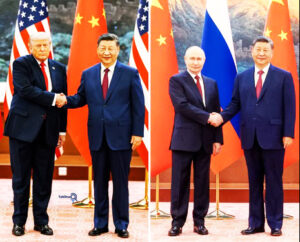
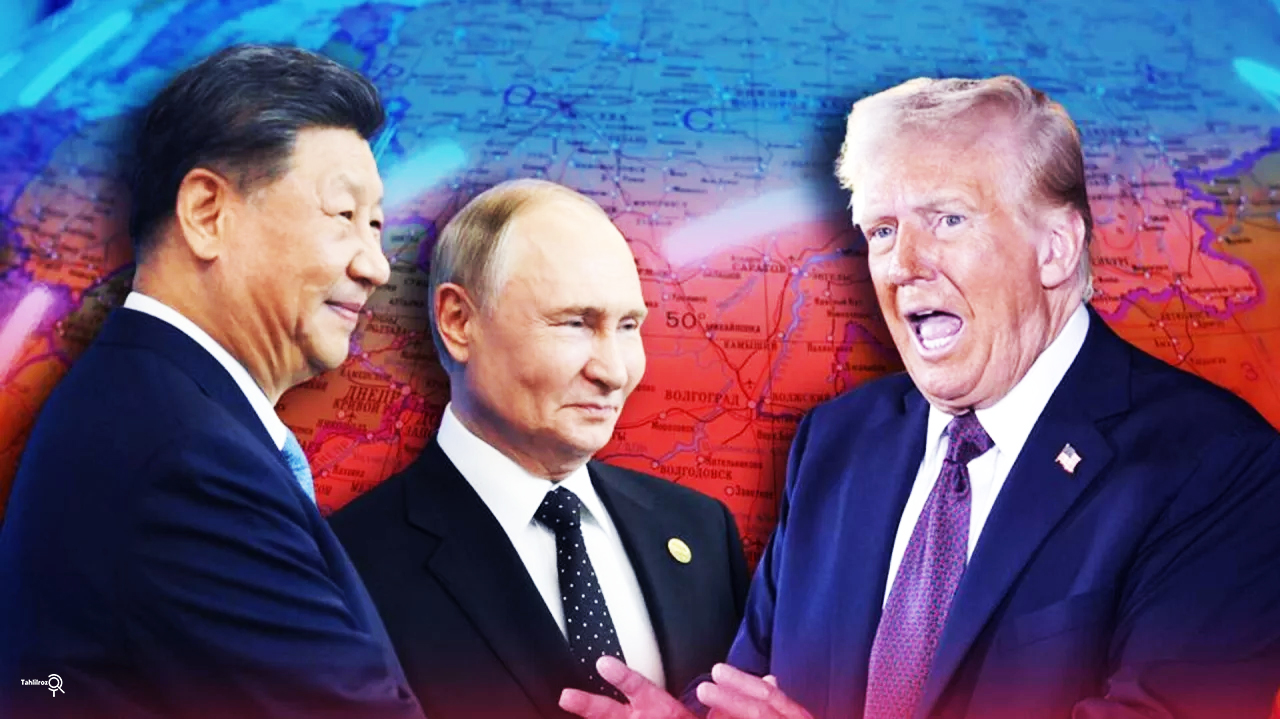
In May 2026, Beijing hosted two of the world’s most influential political figures within a short span of time: Donald Trump, President of the United States, and Vladimir Putin, President of Russia. Both traveled to China. Both met with Chinese President Xi Jinping. Both appeared as guests of a major global power. Yet the outcomes of their visits were far from equal.
Putin left Beijing with clear strategic messages, cooperation agreements, and a public display of political closeness with China. Trump, despite the official ceremonies and media attention surrounding his visit, failed to secure achievements that matched expectations.
The story is straightforward: Beijing prepared a partnership table for Putin but only a negotiation table for Trump. While China and Russia discussed the future global order, multipolarity, resistance to Western pressure, and long-term cooperation, discussions with the United States remained focused on managing tensions, limited trade arrangements, and preventing further escalation. This contrast revealed an important reality: China does not view Trump as a strategic partner. Instead, Beijing sees him as a costly, unpredictable rival that must be carefully managed.
Trump in Beijing: Grand Ceremonies, Limited Results
From the outside, Trump’s visit to China appeared impressive. Official receptions, meetings with Xi Jinping, ceremonial events, and extensive media coverage all sought to present the trip as significant. However, in global politics, red carpets and photo opportunities matter less than tangible outcomes. By that measure, Trump’s visit appeared far less productive than Putin’s.
The clearest sign of this limitation was the absence of a joint statement between Washington and Beijing. In major meetings between great powers, a joint communiqué usually signals agreement on at least some principles, future directions, or areas of cooperation. Trump’s visit ended without such a document, indicating that Beijing was unwilling to elevate relations with Washington to a level that could be described as strategic.
Trump attempted to portray the trip as a success. He highlighted China’s reported purchase of 200 Boeing aircraft as a major achievement. Yet compared with earlier expectations, the deal was too modest to be viewed as a major victory. Before the visit, speculation centered on a much larger agreement involving as many as 500 aircraft. What ultimately emerged fell well short of those expectations, and key details regarding implementation and timelines remained unclear.
In simple terms, Trump secured what looked more like a limited commercial concession than a strategic breakthrough. China allowed him to return home with a few economic talking points but offered nothing that significantly strengthened America’s position vis-à-vis Beijing. This reflected China’s diplomatic approach: showing formal respect to Trump while withholding meaningful strategic concessions.
Putin in Beijing: Agreements, Messaging, and Strategic Partnership
Putin’s visit to China had a fundamentally different character. He did not travel to Beijing merely for official photographs or a limited commercial agreement. His trip formed part of a broader strategic trajectory that Moscow and Beijing have pursued for years to reduce Western influence and promote a more multipolar international order.
During the visit, China and Russia issued a lengthy joint statement and signed multiple cooperation agreements. These covered areas including energy, scientific cooperation, economic development, media collaboration, healthcare, and broader bilateral relations. More important than the number of agreements was the political message behind them: Beijing and Moscow sought to demonstrate that their relationship is not merely tactical or temporary but increasingly represents a durable partnership capable of withstanding Western pressure.
Putin was not treated as an ordinary foreign guest. He was received as China’s strategic partner. The tone of the meetings, the language used by both sides, their emphasis on friendship, opposition to unilateralism, and references to a new international order all underscored the special status Russia holds in Beijing’s calculations. While Trump represented a challenge to be managed, Putin represented a strategic opportunity.
This is where the key difference becomes evident. Trump arrived seeking concessions; Putin arrived to reinforce a political alignment. Trump sought to showcase deal-making skills; Putin sought to demonstrate geopolitical convergence. Trump returned with limited economic promises; Putin left with a stronger image of strategic partnership.
China Does Not Trust Trump
One reason Trump’s visit produced limited results is Beijing’s lack of strategic trust in him. From China’s perspective, Trump represents a country that has spent years attempting to contain China’s rise through tariffs, sanctions, technological restrictions, support for Taiwan, alliance-building across Asia, and measures targeting Chinese companies.
As a result, Beijing may negotiate with Trump, but it is unwilling to alter its long-term strategic course to satisfy him. Chinese leaders view Trump less as a reliable partner and more as a transactional, unpredictable politician who frequently relies on pressure tactics. Beijing understands that any agreement reached today could be challenged tomorrow by new tariffs, sudden policy shifts, or aggressive political rhetoric.
For this reason, China approached Trump cautiously. It offered diplomatic respect but withheld strategic trust.
This represented a subtle setback for Trump. He hoped to project an image of strength, influence, and successful deal-making through his visit to Beijing. China prevented that narrative from fully taking shape. Beijing engaged with him but did not elevate him. It welcomed him but did not embrace him as a partner.
Russia Is Not a Rival to China—It Is a Complement
In contrast, the China-Russia relationship is not built upon direct competition. Unlike the United States, Russia is not a major economic threat to China. Moscow does not compete with Beijing in a decisive way across manufacturing, consumer exports, commercial technology, or global supply chains.
Instead, Russia complements China in several critical areas: energy supplies, natural resources, geographic depth, military capabilities, influence within the United Nations Security Council, and broader geopolitical leverage against the West.
China values Russia because Moscow can help absorb some of the pressure directed at Beijing by Western powers. Russia, in turn, relies on China as an economic and political lifeline amid sanctions and sustained Western pressure. This mutual dependence has elevated their relationship beyond short-term transactions.
Within this context, Putin’s visit carried significant importance. He sought to demonstrate that Russia remains far from isolated on the world stage. China welcomed him in order to send a message that Western countries cannot unilaterally determine the rules of global politics. That message was arguably more important than any individual economic agreement.
Beijing’s Message to Trump: We Will Negotiate, But We Will Not Retreat
China’s message to Trump was clear: Beijing is prepared to negotiate, but it is not prepared to surrender. China may be willing to discuss reducing trade tensions, extending tariff truces, or opening selected sectors of its market, but it will not abandon its broader strategic objectives under American pressure.
This reality placed significant limits on Trump’s ambitions. He has long preferred to present agreements as personal victories. Yet in Beijing, he was unable to secure such a triumph. There was no major joint statement, no strategic agreement, no substantial political concession, and no meaningful shift in the trajectory of U.S.-China competition. What remained were a handful of modest economic outcomes that many observers viewed as underwhelming.
Putin, by contrast, departed Beijing with a much stronger political message. China and Russia not only reaffirmed cooperation but also framed their relationship as part of a broader global project: resisting unilateralism, strengthening a multipolar world order, and reducing dependence on the West.
Trump and Putin in China; Conclusion
The contrast between the two visits is clear. Trump gained relatively little from his trip to Beijing, while Putin gained considerably more. The United States and China remain locked in a relationship defined by competition and distrust. Russia and China, meanwhile, continue moving toward deeper coordination and a shared vision of global balancing.
Beijing offered Trump formal respect, but it granted Putin strategic significance.
If this diplomatic week is viewed as a test of the standing of two world leaders, the clear winner was Putin rather than Trump. Trump left Beijing with imagery and headlines. Putin left with political capital. That difference captures the essence of the story.
Saeed Mohammadi