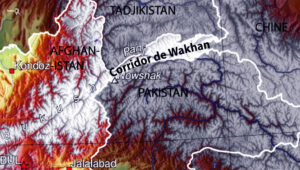
The Wakhan Corridor, the narrow mountainous strip in northeastern Afghanistan that once formed part of the ancient Silk Road and served as a passage for traders, explorers, and conquerors, is once again emerging as one of the region’s most strategically sensitive geopolitical zones.
In recent months, the Islamic Emirate has accelerated efforts to develop the Wakhan Corridor by constructing a road connecting Afghanistan to the Chinese border. According to Taliban officials, the first phase of the project has already reached the zero-point border area, while work on subsequent stages continues.
Through this initiative, the Taliban hope to realize one of Afghanistan’s oldest geo-economic ambitions: establishing direct land access to China. Although this objective appears geographically feasible, it faces a complex combination of security, political, and strategic challenges.
Despite visible progress on the Afghan side of the project, there has been little evidence of practical Chinese support, direct investment, or an official commitment from Beijing to activate the route. This reality suggests that the Wakhan Corridor is no longer merely an infrastructure or transportation project. Instead, it has become a key piece on the geopolitical chessboard of regional competition, involving actors ranging from Kabul and Islamabad to Beijing, Tashkent, and Tehran.
China’s Security Calculations: The Wakhan Corridor and Xinjiang
From Beijing’s perspective, the Wakhan Corridor represents far more than a transportation route. It is viewed as a direct extension of China’s national security frontier. Any opening of this corridor presents two simultaneous realities for Chinese policymakers: an opportunity for economic connectivity and a potential source of new security risks. Consequently, discussions about the Wakhan Corridor are driven less by China’s economic planners than by its security and strategic institutions.
China fully recognizes Afghanistan’s geographical importance as a potential land bridge linking East Asia with Central Asia and the Middle East. The Wakhan Corridor offers the shortest overland connection between western China and these regions, giving it the potential to become a major regional artery. Yet for Beijing, economics is not the primary concern—security is.
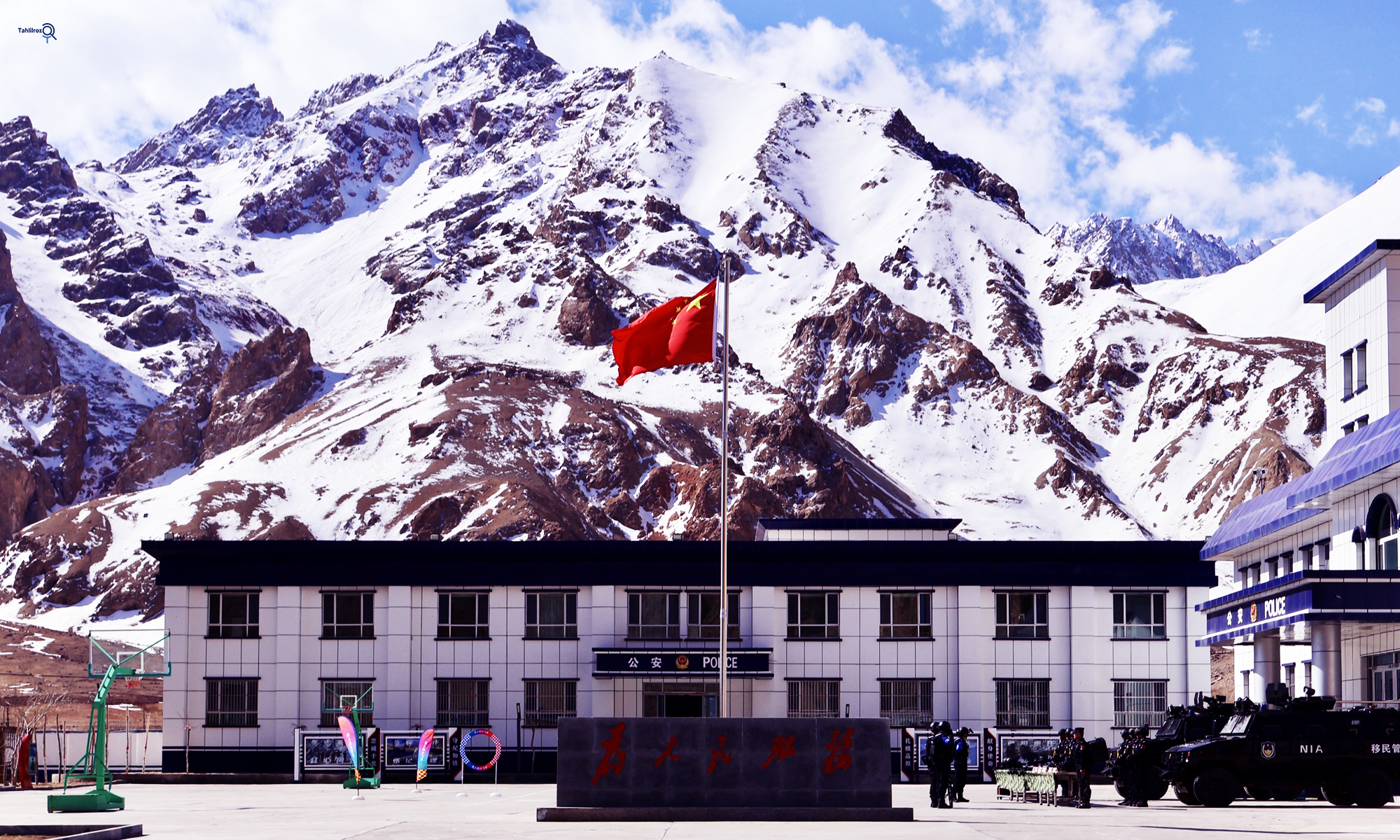
China’s greatest concern centers on Xinjiang, the Uyghur Autonomous Region bordering the Wakhan Corridor. Beijing considers Xinjiang one of the country’s most sensitive internal security regions and has devoted significant resources in recent years to combating what it describes as extremism, separatism, and terrorism.
Against this backdrop, creating an active transport link between Taliban-controlled Afghanistan and China’s western frontier is not viewed simply as a logistics project. Rather, it is considered a matter of managing cross-border security risks. Even if the Taliban continue to emphasize their commitment to combating certain militant groups, Chinese policymakers remain concerned about the possibility of instability spilling across borders.
Strategic circles in Beijing also believe that intensifying competition between China and the United States, together with regional rivalries involving India, could eventually transform Afghanistan into another arena of great-power competition. Under such circumstances, instability along the Wakhan Corridor would no longer be regarded as a localized problem but as part of a broader geopolitical challenge targeting China’s strategic interests.
For this reason, Beijing seeks to manage the Wakhan Corridor not only as a transportation project but also as a strategic security buffer. For China, the primary objective is not simply constructing a road or opening a border crossing. It is preventing Afghanistan from becoming a channel for instability, extremist networks, and security threats that could undermine western China’s strategic environment.
This security-first approach explains why China, despite its interest in expanding regional connectivity, continues to pursue a cautious and gradual policy toward the Wakhan Corridor.
Pakistan’s Determination to Preserve Its Transit Advantage
If China’s perspective on the Wakhan Corridor is primarily security-driven, Pakistan’s calculations are rooted more deeply in economics and strategic influence.
To understand Islamabad’s sensitivity toward the corridor, one must first examine Pakistan’s current position within the regional transportation network. Over the past decade, the ports of Karachi and Gwadar have become central pillars of Pakistan’s regional strategy. Likewise, the China–Pakistan Economic Corridor (CPEC) has been built around the vision of transforming Pakistan into the principal gateway connecting Central Asia and Afghanistan to international maritime trade.
In this context, an operational Wakhan Corridor would create an alternative route that links Afghanistan directly to China without passing through Pakistani territory. Such a development could gradually erode Pakistan’s long-standing transit advantage.
Reducing Afghanistan’s dependence on Pakistani trade routes, redirecting portions of regional commerce, and expanding Kabul’s transportation options all represent developments that naturally concern Islamabad. However, the issue extends well beyond economics.
For decades, Pakistan has sought to maintain its influence in Afghanistan while leveraging its geography as a strategic asset. Should the Wakhan Corridor become fully operational, enabling direct connectivity between China and Afghanistan, some of Pakistan’s traditional geopolitical leverage would inevitably weaken.
This creates a complex strategic triangle. The Taliban seek to reduce Afghanistan’s dependence on Pakistan by establishing an independent economic corridor. Pakistan aims to preserve both its transit advantage and regional influence. China, meanwhile, finds itself balancing between its long-standing strategic partner, Pakistan, and the opportunities—along with the risks—presented by Afghanistan.
At least under current conditions, Beijing’s strategic calculations continue to favor Islamabad. Preserving the stability of CPEC and protecting tens of billions of dollars in Chinese investments remain significantly more important than rushing to activate the Wakhan Corridor.
The Wakhan Corridor: A Road Awaiting Major Strategic Decisions
The Taliban’s efforts to develop the Wakhan Corridor Road project represent far more than a conventional infrastructure initiative. They reflect a broader geoeconomic strategy aimed at breaking Afghanistan’s geographic isolation and establishing direct connectivity with East Asia. In principle, these efforts deserve recognition, as improving regional connectivity has long been one of Afghanistan’s key economic aspirations. Yet the future of the Wakhan Corridor will not be determined in Kabul alone.
China continues to view the project through the lens of its broader security concerns surrounding Xinjiang, while Pakistan remains reluctant to lose its strategic transit advantage and geopolitical leverage. At the same time, Afghanistan hopes the corridor will become a catalyst for reducing its dependence on neighboring transit routes and strengthening its role in regional trade and connectivity.
In essence, the Taliban are investing in a geoeconomic assumption: that infrastructure can be built before political consensus is achieved.
However, the history of international trade corridors suggests otherwise. Roads evolve into strategic transit routes only when security, investment, political legitimacy, and the interests of regional stakeholders are aligned. Today, the Wakhan Corridor remains a promising possibility rather than an operational international corridor.
Should these geopolitical obstacles eventually be resolved, this narrow mountainous passage could move from the margins of geography to the center of Asian geopolitics. It has the potential to become one of the most strategically significant crossroads in the heart of Asia—a place where not only Afghanistan’s future, but also the regional balance of power, may be reshaped.
Conclusion
The future of the Wakhan Corridor will depend on far more than road construction. It will be shaped by the strategic calculations of China, Pakistan, Afghanistan, and other regional powers whose interests converge—and often collide—along this narrow strip of land.
For Beijing, the corridor represents both economic opportunity and a potential security vulnerability. For Pakistan, it could challenge decades of transit dominance and reduce Islamabad’s geopolitical influence over Afghanistan. For Kabul, however, the Wakhan Corridor symbolizes an opportunity to diversify trade routes, reduce economic dependence, and reposition Afghanistan as a regional connectivity hub.
Whether the project ultimately succeeds will depend on achieving a delicate balance between infrastructure development, regional security, political legitimacy, and long-term strategic cooperation.
Until then, the Wakhan Corridor remains more than a road under construction. It is an emerging geopolitical equation—one that could redefine connectivity, security, and power dynamics across the heart of Asia.
Saeed Mohammadi