Independent Inquiry relating to Afghanistan: A Court of Truth
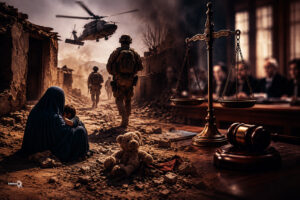
Before sunrise, Helmand was still asleep. The only sound breaking the silence of the village was the roar of helicopters descending through the darkness. Minutes later, gunfire began. Doors were forced open. Women clutched their children in their arms. Men—some of whom would never have the chance to prove that they were farmers rather than fighters—were caught in the chaos.
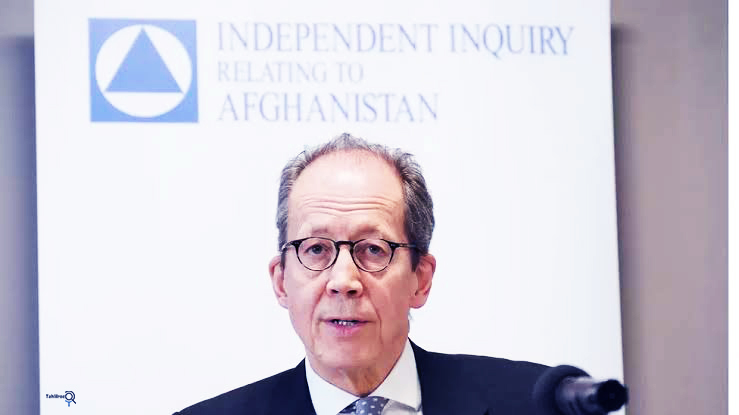
When the operation was over, the forces left. What remained were destroyed homes, grieving families, and a silence that would hang over those nights for years. Fifteen years later, that silence has finally been broken—not on the battlefield, but in the hearing rooms of the Independent Inquiry relating to Afghanistan in London.
Two whistleblowers, themselves once part of Britain’s military establishment, have described accounts that go beyond the actions of a handful of soldiers. Their testimony points to an alleged culture in which violence, a lack of oversight, and efforts to keep the truth hidden existed side by side. The significance of these revelations is not limited to what happened years ago in the villages of Afghanistan.
The larger question is this: if an army that entered Afghanistan under the banners of freedom, human rights, and the rule of law now finds itself facing such allegations, what remains of the moral legitimacy of that narrative? What is effectively being put on trial in London today is not merely the conduct of several soldiers. It is the credibility of a narrative that spent two decades justifying war in the name of human rights.
A War That Was Supposed to Bring Freedom: The First Crack in the Western Narrative
When the Twin Towers in New York collapsed on September 11, 2001, the world witnessed more than a terrorist attack. It also witnessed the beginning of a new era in international politics. Less than a month later, a U.S.-led coalition, joined by Britain, launched its military campaign under the stated goals of destroying terrorism, dismantling al-Qaeda, and liberating the people of Afghanistan from Taliban rule. A war that was expected to last only a few weeks eventually became the longest Western military engagement of the twenty-first century.
Over the next two decades, billions of dollars were spent training the Afghan army, rebuilding state institutions, expanding education, promoting women’s rights, and organizing elections. Afghanistan was supposed to become the showcase of the West’s “state-building” project—an example demonstrating that military power could create the conditions for freedom, democracy, and the rule of law.
The American political theorist Joseph Nye described this ability as “soft power”: power derived not from the barrel of a gun, but from the attractiveness of values, political legitimacy, and international trust. But unlike military power, soft power cannot be created by occupying territory. It is built through trust. A country that convinces others that it genuinely believes in the values it promotes can exercise influence without firing a single bullet.
The West also sought to present its presence in Afghanistan not as a military occupation, but as a mission to defend those very values. Yet when a gap emerges between rhetoric and reality, that moral capital gradually erodes—a process whose cost can sometimes be greater than defeat on the battlefield itself. However, during the very years in which this narrative was repeatedly promoted in international forums, reports emerged from villages in Helmand, Kandahar, and Uruzgan describing civilian casualties, night raids, and harsh treatment of local communities.
Hamid Karzai, Afghanistan’s president at the time, repeatedly warned about the killing of civilians during such operations and stressed that their continuation would destroy public trust in both the Afghan government and foreign forces. Those warnings, however, were often overshadowed by the perceived necessities of the war on terrorism.
Today, as new revelations emerge through the Independent Inquiry relating to Afghanistan, those long-forgotten protests have gained new life. History appears to be asking the same question once again: Could a war that began with promises to defend human rights remain faithful, in practice, to the very values whose banner it had raised?
Independent Inquiry relating to Afghanistan: When the Truth Came From Inside the Military
Inside the inquiry room, there were no dusty uniforms, armored vehicles, or the chaos of the battlefield. Only one question was repeatedly asked: “What happened that night?” And with every answer, another layer was stripped away from a war whose official narrative had prevented much of its darker reality from being fully seen for years.
During recent hearings of the Independent Inquiry relating to Afghanistan, witnesses who had once served alongside British Special Forces in Afghanistan described an environment in which, according to their accounts, violence was not always confined to the battlefield.
Some former military personnel who testified during the inquiry spoke about concerns that had been raised at the time regarding the conduct of Special Forces. These concerns included allegations involving the killing of individuals who may not have posed a threat and doubts surrounding certain operational reports. They alleged that some operations differed significantly from the accounts later recorded on paper.
It was as though, after every military operation ended, another war began—a war to construct a version of events that would cause the least possible damage to the reputation of the unit involved. Perhaps the most disturbing aspect of the testimony, however, concerns not only those who were killed, but also the fate of those who dared to ask questions.
During one of the inquiry hearings, it was stated that after three Afghan farmers were killed, some officers sought clarification about what had happened. Instead of receiving answers, however, they were allegedly branded as “Taliban sympathizers.”
If such allegations are confirmed through the inquiry process, the issue would extend far beyond the actions of several soldiers during a single operation. It would point instead to a culture in which questioning could be punished rather than encouraged. This is where the Afghanistan case moves beyond a simple allegation of war crimes.
The question is not only what happened in Helmand. The deeper question is whether oversight mechanisms genuinely sought the truth—or whether their primary purpose was to protect institutional reputation. When official reports come under serious doubt and critics within a system face pressure, what suffers is not merely trust in a military unit. Trust in the entire narrative used to justify the war begins to collapse.
History has seen similar moments before. The starting point for this renewed examination was not a government report, but investigative journalism. A 2022 BBC Panorama investigation raised allegations concerning unlawful killings by British Special Forces in Afghanistan and increased pressure for the case to be examined again. The investigation pointed to incidents in which the deaths of Afghan civilians occurred under circumstances that raised serious questions about the official accounts of military operations.
The My Lai massacre in Vietnam remained hidden behind a wall of silence within the U.S. military for years until the testimony and revelations of individuals helped expose the truth. Decades later, the publication of photographs from Abu Ghraib prison demonstrated once again that sometimes the most dangerous enemy facing an army is not on the other side of the battlefield—but the silence it creates around its own mistakes.
That is why the importance of the Independent Inquiry relating to Afghanistan extends far beyond the fate of several military operations. Every new testimony raises an increasingly important question: If the truth remained hidden for years behind walls of silence and official reports, how much trust can the world’s public place in the moral narratives of major powers in future wars?
From Helmand to Abu Ghraib: The Collapse of Moral Capital
Wars usually begin with the sound of explosions and gunfire. But sometimes a single photograph, testimony, or document that becomes permanently embedded in the memory of nations can alter the legacy of a war more profoundly than thousands of military operations.
In Vietnam, it was My Lai that permanently damaged America’s narrative of the war. Hundreds of civilians were killed in the village, and the eventual exposure of the truth shook public confidence more deeply than any military victory could restore.
Decades later, images from Abu Ghraib prison in Iraq revived another troubling question: How can an army that enters a country under the banner of freedom become a symbol of violations of human dignity?
Today, Helmand may be moving toward becoming one of those enduring names in history—not because of the scale of its military operations, but because recent revelations have once again exposed the gap between declared values and the realities of war.
The German sociologist Max Weber argued that power remains durable when it is regarded as legitimate—when people believe that its exercise is based on acceptable principles. This principle is not limited to governments. In international politics, major powers often exercise influence not merely through weapons, but through their moral credibility.
When that credibility is damaged, even the most advanced armies cannot fill the resulting vacuum of legitimacy through military force alone. Perhaps the greatest loss of the Afghanistan war was therefore not its financial cost, nor even the West’s military failure.
It was the erosion of this moral capital. That capital had been built over decades around concepts such as human rights, the rule of law, and the defense of freedom. Yet with every new revelation, it is increasingly exposed to doubt.
For this reason, what is being examined today by the Independent Inquiry relating to Afghanistan is not simply the conduct of a group of Special Forces personnel. This case is a test of the credibility of a narrative that, for two decades, portrayed military intervention in Afghanistan not merely as a security necessity, but as a moral responsibility. If that narrative cannot withstand the reality revealed by the evidence, its failure may prove more enduring than any military defeat.
Elham Ghasemi