Fall of the Afghan Republic
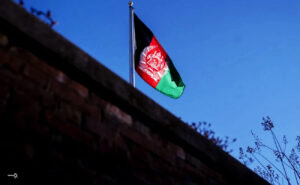
In the days leading up to August 15, 2021, Afghanistan’s political and military landscape was changing at an unimaginable speed. Districts that had changed hands between the government and the Taliban for years were falling one after another. Then came the provincial capitals.
Zaranj fell, Sheberghan slipped out of government control, Herat and Kandahar were lost, and eventually Mazar-i-Sharif also fell. The noose around Kabul was tightening by the hour.
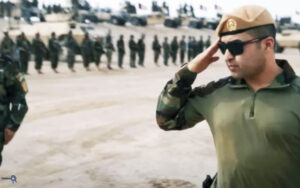
The Afghan army, which had cost billions of dollars to build over nearly two decades, was retreating or surrendering in many areas. Elsewhere, the collapse of supply lines and the breakdown of command left troops unable to continue fighting. Local commanders began looking for ways to save themselves, while political leaders in Kabul were still searching for a solution to a crisis that had already gone far beyond the warning stage.
Yet amid all the images from those final days, one major absence received relatively little attention: the people.
The political system that had governed Afghanistan for two decades had educated millions of students, supported hundreds of media outlets, and held several elections. Yet at the most critical moment of its existence, it failed to generate a broad-based social mobilization to defend its survival.
Of course, in several provinces, local forces and commanders fought against the Taliban, while thousands of Afghan soldiers and police officers paid a heavy price during the final stages of the war. But what never emerged was a nationwide social movement that viewed the Fall of the Afghan Republic not simply as a crisis affecting the presidential palace and security forces, but as a threat to society itself. Why?
Were Afghans Tired of the Republic—or Tired of Its Rulers?
First, it is important to distinguish between two concepts: the Republic as a political system and the governments that operated under it. They were not necessarily the same thing.
A significant portion of Afghan society benefited from the developments that emerged after 2001. Schools and universities expanded, numerous media organizations became active, women gained a greater presence in education and public life, and a new generation grew up in Afghanistan’s cities with different experiences and expectations of government.
But supporting these achievements did not necessarily mean trusting the politicians who governed the Republic.
Over two decades, a gap emerged between the values the system claimed to represent and the way power was actually distributed. The government spoke of democracy, yet almost every major election was accompanied by disputes and allegations of fraud.
Officials spoke of the rule of law, yet many citizens encountered intermediaries, bribery, and personal connections when trying to complete even basic administrative tasks. The government spoke of a national state, but competition over ethnic, party, and political interests consumed a significant portion of its energy. A quiet contradiction therefore developed.
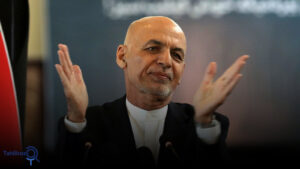
A citizen could support the preservation of the Republic’s social and political freedoms while still being unwilling to risk their life for the survival of Ashraf Ghani’s government. That distinction became crucial during the final days before the Fall of the Afghan Republic.
Elections were supposed to be the most important source of legitimacy for Afghanistan’s new political system. Yet over time, elections themselves became one of the country’s major sources of crisis.
The 2014 presidential election pushed Afghanistan toward a serious political crisis. The result was not a normal transfer of power but the creation of a National Unity Government through U.S. mediation. Five years later, the 2019 presidential election also failed to resolve the political dispute.
For ordinary citizens, a simple question increasingly emerged: If the people’s vote is supposed to determine political power, why do political agreements, foreign pressure, and deals among political leaders have to resolve the crisis after every election? These developments gradually eroded something essential to the survival of any political system: trust.
Afghanistan Was More Than Kabul
Another major weakness of the Afghan Republic was the gap between the Afghanistan seen from Kabul and the reality experienced by many people in the country’s districts. In Kabul, political discussions focused on elections, the Constitution, media freedom, civil society, and the future of democracy. Universities were expanding, media organizations were growing, and a new urban middle class was emerging. But there was another Afghanistan.
In many districts, the government was not experienced by citizens through parliament or television. It was represented by security checkpoints, district governors, courts, police, and the quality of public services. War was also concentrated largely in these areas.
Rural communities that had spent years living amid Taliban operations, government forces, airstrikes, explosions, searches, and insecurity had a very different understanding of the Republic from an urban resident of Kabul.
One of the political mistakes of the final years may have been the assumption that support for the lifestyle and social freedoms emerging in Afghanistan’s major cities was equivalent to broader trust in the entire political system. But the two were not the same.
A Society Exhausted by War
By 2021, war was no longer an emergency situation for many Afghans. It had become part of everyday life. A child born after 2001 was almost 20 years old when Kabul fell—and had never known an Afghanistan without war.
The Taliban had carried out widespread attacks. Afghan security forces had suffered enormous casualties. Civilians had been killed in bombings and attacks, while military operations and airstrikes also imposed heavy costs on local communities.
Under these circumstances, part of society was thinking less about which side would win and more about how the war could finally end. Being tired of war was not the same as supporting the Taliban.
A person could oppose the Taliban while also being unwilling to fight to preserve the existing system. A family could fear the prospect of Taliban rule while, after years of insecurity, simply hoping that the war would not reach their neighborhood.
This gray zone was overlooked in many political narratives. Afghanistan in the summer of 2021 was not simply divided into two clearly defined camps: supporters of the Republic and supporters of the Taliban. Between these two groups stood a large population that was exhausted, anxious, and waiting to see who would hold power the following day.
The silence of a large part of society was not necessarily a vote of confidence in the Taliban. Rather, it reflected the fact that the Republic had failed, at the decisive moment, to turn its survival into a cause shared by a sufficiently large segment of society.
The Fall of the Afghan Republic Was More Than a Military Collapse
Until its final days, the Republic still had ministries, an army, police forces, embassies, a budget, and diplomatic recognition from almost the entire international community. What it lacked at the moment of crisis was sufficient political capital to transform the survival of the government into a public cause.
The Fall of the Afghan Republic was therefore not simply a military failure. It was also a failure of political legitimacy, public trust, institutional cohesion, and social mobilization. The speed of the Afghan Republic collapse demonstrated how fragile a political order can become when its formal institutions remain intact while its social foundations have weakened. The Republic possessed the institutions of a functioning state, but those institutions were increasingly disconnected from a large part of the population.
The Fall of Kabul and the Final Collapse
The Fall of Kabul on August 15, 2021, became the defining image of the collapse of Afghanistan’s Republic. But Kabul was the final stage of a process that had already begun across the country.
By the time the Taliban entered the capital, provincial capitals had fallen in rapid succession, government forces were collapsing, political leaders were losing control, and public confidence in the government’s ability to survive was rapidly disappearing.
The Fall of Kabul was therefore both a military event and the culmination of a much broader political and institutional collapse. The question is not simply why Kabul fell so quickly. The deeper question is why the Afghan Republic had become so difficult for society to defend by the time the final crisis arrived.
The Final Lesson of the Fall of the Afghan Republic
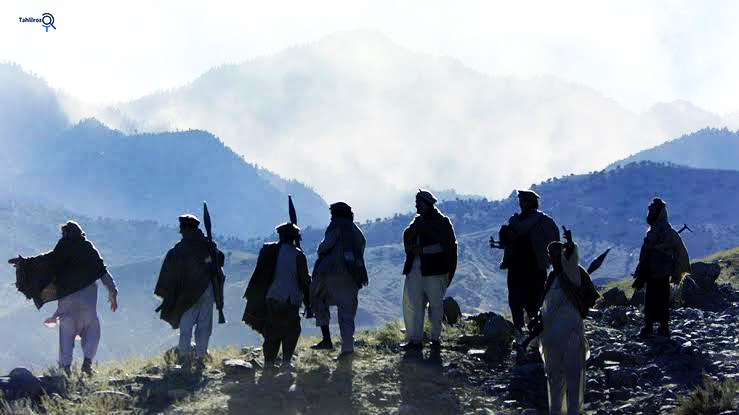
This lesson does not belong only to Ashraf Ghani or the former Republic. The Taliban now face the same historical question, although under very different circumstances: How should the relationship between government and society be built? There is a short answer and a much longer, more complicated one. But the short answer is this:
No political system should ever assume that public silence is permanently equivalent to public consent.
The Fall of the Afghan Republic showed that political survival depends on more than institutions, elections, foreign support, military forces, or international recognition. Ultimately, a government must convince a significant part of its society that its survival is worth defending. When that connection disappears, a system may look powerful from the outside while becoming increasingly fragile from within.
And when a crisis finally arrives, the absence of public mobilization can become just as consequential as the collapse of an army.
Hakim Tajik