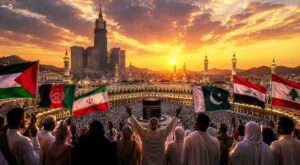
Ayatollah Khamenei’s Funeral
Few events in modern Middle Eastern history have drawn as much attention as the funeral ceremonies of Ayatollah Seyyed Ali Khamenei. Following his martyrdom during the recent conflict, Iran organized an unprecedented week-long series of mourning ceremonies that extended beyond its borders into neighboring Iraq.
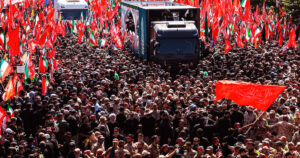
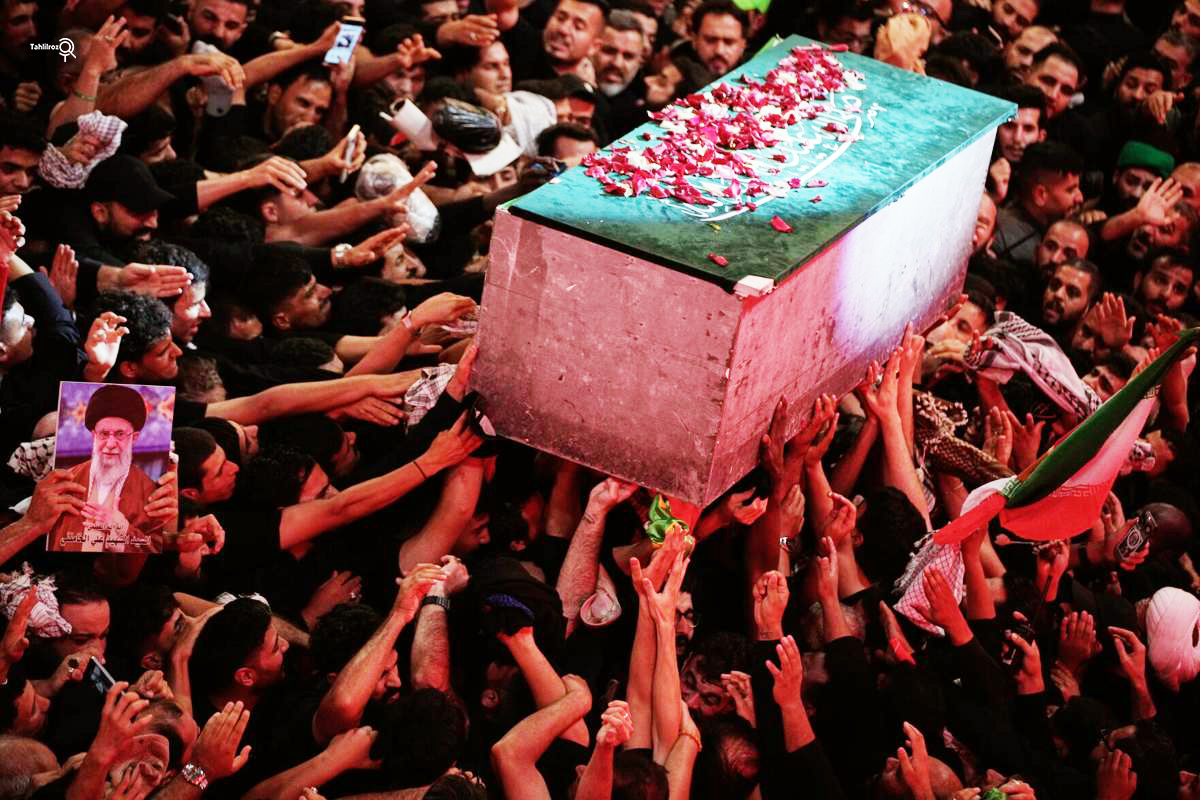
Millions of mourners lined streets, filled squares, and gathered around some of the holiest sites in Shiite Islam, transforming the funeral into one of the largest public religious and political gatherings of the 21st century. Reports from international media described massive crowds throughout Tehran before the procession continued to Iraq’s holy cities and ultimately returned to Mashhad for burial.
For many observers, however, the funeral was about far more than paying tribute to one individual. Every destination along the procession appeared carefully chosen, creating a symbolic journey through the political, religious, and historical foundations of Shiite Islam.
From Tehran to Qom, then across the border to Najaf and Karbala before returning to Mashhad, the route reflected a narrative connecting leadership, scholarship, sacrifice, pilgrimage, and civilizational continuity.
Millions of Iranians and Iraqis: A Display of Religious Unity
The first striking aspect of Ayatollah Khamenei’s Funeral was its extraordinary public participation. In Tehran, enormous crowds gathered around the Grand Mosalla and throughout the city’s major avenues as mourners accompanied the coffin during several days of ceremonies. Similar scenes unfolded in Qom before the procession crossed into Iraq, where thousands upon thousands welcomed the cortege in Najaf and Karbala. Reuters and the Associated Press reported that Iraqi officials, senior clerics, and large numbers of ordinary citizens joined Iranian mourners, illustrating the cross-border character of the ceremonies.
The participation of Iraqis carried particular significance. Unlike an ordinary state funeral confined within national borders, these ceremonies demonstrated the enduring religious connections linking Shiite communities in Iran and Iraq. Every year, millions of Iranians travel to Iraq for the Arbaeen pilgrimage, while Iraqi pilgrims regularly visit Iran’s sacred shrines. The funeral therefore followed well-established religious and cultural ties that have existed for centuries.
For Iranians, the vast crowds also conveyed another message: that despite years of sanctions, military confrontation, and political pressure, the country was still capable of mobilizing millions around a shared religious and national occasion.
Tehran: The Political Heart of the Islamic Republic
The journey appropriately began in Tehran. As Iran’s capital, Tehran represents the country’s political authority. It is home to the Office of the Supreme Leader, the Presidency, Parliament, the Armed Forces, and the principal institutions of the Islamic Republic. Beginning the funeral in Tehran symbolized the conclusion of an era that shaped Iranian politics for nearly four decades.
It also enabled millions of citizens from across Iran to participate in what became the central state ceremony before the procession moved toward the country’s religious centers. In many ways, Tehran represented the governmental dimension of Ayatollah Khamenei’s legacy.
Qom: The Center of Shiite Scholarship
The second destination carried an entirely different message. Qom is universally recognized as Iran’s foremost center of Shiite learning. Home to the country’s largest seminaries and religious institutions, the city has educated generations of scholars from across the Muslim world. The Islamic Revolution itself cannot be understood without Qom.
It was from this city that many revolutionary scholars developed the intellectual foundations of the Islamic Republic.
Taking the funeral procession to Qom therefore emphasized that Ayatollah Khamenei’s legacy was not limited to political leadership. It also reflected decades of religious scholarship, jurisprudence, and theological influence. Moving from Tehran to Qom symbolically linked state leadership with religious authority.
Najaf: Returning to the Roots of Shiite Leadership
Crossing into Iraq transformed the funeral from a national ceremony into an international religious event. Najaf occupies a unique position within Shiite Islam.
The city is home to the shrine of Imam Ali ibn Abi Talib—the first Imam according to Shiite belief—and has served as one of Islam’s greatest centers of scholarship for more than a thousand years.
Holding funeral ceremonies there highlighted the historical continuity between Iran’s contemporary religious leadership and the broader tradition of Shiite scholarship. It also acknowledged that Shiite identity extends beyond modern political borders.
International coverage showed thousands of Iraqi mourners filling Najaf’s streets alongside Iranian officials, reinforcing the shared religious heritage connecting both nations.
Karbala: The Eternal Symbol of Sacrifice
No city better represents sacrifice in Shiite history than Karbala. It was there that Imam Hussein, the grandson of Prophet Muhammad, was martyred during the Battle of Karbala in 680 CE—an event that remains the defining moment of Shiite religious identity. Throughout the history of the Islamic Republic, Karbala has served as a powerful symbol of resistance against oppression.
Political speeches, religious sermons, and national commemorations have repeatedly invoked Imam Hussein’s stand as an enduring model of courage and steadfastness. Including Karbala in the funeral route therefore carried profound symbolic meaning. It connected Ayatollah Khamenei’s final journey with one of the most sacred narratives in Shiite history.
For millions of mourners, Karbala represented not merely another city but the spiritual heart of the ideals of sacrifice, justice, and resistance.
Mashhad: Returning Home
The final destination of Ayatollah Khamenei’s Funeral was Mashhad. As Ayatollah Khamenei’s birthplace and home to the shrine of Imam Reza—the eighth Imam in Shiite Islam—Mashhad holds exceptional religious significance.
Every year millions of pilgrims visit the shrine, making it one of the largest pilgrimage sites in the Islamic world. Ending the funeral there united the personal and the spiritual.
It returned Ayatollah Khamenei to the city of his birth while placing his burial beside one of Shiite Islam’s holiest shrines. International reporting confirmed that the week-long procession was designed to conclude with burial in Mashhad after ceremonies in Iran and Iraq.
A Route That Tells a Story
Viewed together, Ayatollah Khamenei’s Funeral route forms far more than a sequence of cities. Each destination represents a distinct pillar of Shiite civilization:
Tehran symbolizes political leadership and state authority.
Qom represents religious scholarship and theological guidance.
Najaf embodies the origins of Shiite intellectual tradition.
Karbala stands for sacrifice, justice, and resistance.
Mashhad reflects pilgrimage, spirituality, and continuity.
The procession therefore traced what many observers see as the spiritual geography of Shiite Islam. Rather than simply transporting a coffin from one place to another, it connected the principal centers that have shaped Shiite history for centuries.
Beyond Mourning: A Message to the Region and the World
Large state funerals often carry meanings that extend beyond remembrance. They communicate continuity, legitimacy, identity, and resilience.
The scale of participation throughout Iran and Iraq projected an image of cross-border religious solidarity at a time of heightened regional tensions. It also demonstrated that sacred cities remain powerful symbols capable of bringing together millions of people from different countries under a shared religious tradition.
Whether viewed through a political, historical, or theological lens, the funeral route conveyed a carefully constructed message. It presented the Islamic Republic not only as a modern nation-state but as part of a broader religious civilization stretching from Tehran to the holy shrines of Iraq and back to Mashhad.
Ayatollah Khamenei’s Funeral; Conclusion
Ayatollah Khamenei’s Funeral will likely be remembered not only for the immense crowds that accompanied it but also for the remarkable symbolism embedded in every stage of its journey.
From the political center of Tehran to the seminaries of Qom, from the sacred shrines of Najaf and Karbala to the spiritual destination of Mashhad, the procession reflected a narrative of leadership, faith, sacrifice, and continuity.
For millions who participated across Iran and Iraq, the route was more than a geographical itinerary. It became a symbolic map of Shiite identity itself—linking history, belief, and community across borders, and transforming a funeral into one of the most significant religious and political events of the modern Middle East.
These days, Iran was no longer a piece of geography, but an “emotion.” A feeling that began with the trembling voices of mourners in the alleys of Tehran and ended in the meaningful silence of Mashhad. The people did not just mourn a leader; they bid farewell to the epitome of patriotism. A man who had the pride of the name of Iran in his eyes and the strength of identity in his words.
In Ayatollah Khamenei’s Funeral, when the coffin with the Iranian flag passed through the crowd, it was as if Iran itself was finding peace in the arms of the nation. With every cry and every mourning, the people said: “Our faith is the source of our independence, and YOU were the source of this faith.”
In these bitter but glorious days, Iran realized that its greatest asset was not resources and powers, but this unbreakable bond between “the people” and “ideals.” The martyred leader is gone, but what remains of him—that love for millions and that identity-building gaze—shines like a star in the Iranian sky that will never go out.
Mohsen Shahrafiee