Trump’s Fear of Iran’s National Unity
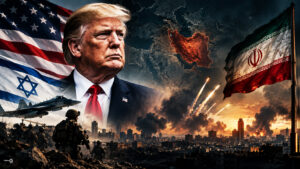
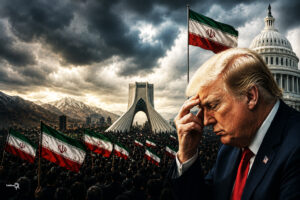
In recent weeks, one issue has dominated political circles and international media alike: Donald Trump’s repeated public admissions that he fears for his life and worries about the possibility of assassination. The same man who once spoke confidently about his “maximum pressure” campaign and openly threatened his adversaries now appears increasingly preoccupied with his own personal security.
Behind these statements, however, lies a deeper geopolitical question. Are Trump’s remarks merely psychological tactics designed to rally his political base and attract public sympathy, or do they reflect a much harsher strategic reality?
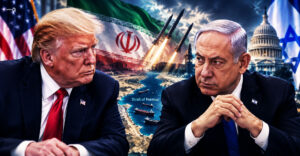
Many political observers argue that Trump’s Fear of Iran’s National Unity cannot be understood in isolation. Instead, it stems from the convergence of two major developments. The first is the unprecedented display of national solidarity inside Iran following escalating military tensions with the United States. The second is the growing strategic isolation of the United States under Trump’s leadership, marked by diplomatic setbacks, declining international influence, and the erosion of traditional alliances.
Together, these developments help explain why the rhetoric of confidence has increasingly been replaced by the language of anxiety.
Trump’s Fear of Iran’s National Unity
To understand Trump’s Fear of Iran’s National Unity, one must first look at the remarkable social mobilization that has taken place across Iran.
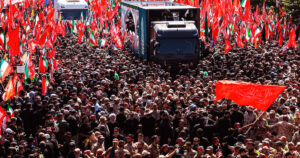
For nearly four months, according to the narrative presented by supporters of the Iranian government, large numbers of Iranians have remained on constant alert following the U.S.-Israeli military strikes launched against Iran on February 28. Reports describe widespread public participation in demonstrations and neighborhood mobilization efforts across cities and provinces throughout the country.
For many participants, these gatherings represent more than symbolic displays of patriotism. They are portrayed as public declarations of national solidarity and collective resistance in defense of Iran’s sovereignty and territorial integrity.
Perhaps the most striking images emerged when Trump publicly threatened to target Iran’s critical infrastructure. According to numerous accounts, thousands of young people, workers, students, and ordinary citizens gathered around bridges, dams, industrial facilities, and key infrastructure sites, establishing what they described as human shields to deter potential attacks.
Their message was unmistakable.
Through slogans emphasizing determination and national resilience, participants sought to communicate that Iran’s territorial integrity was not simply the responsibility of the state but of the nation itself.
From this perspective, Trump’s Fear of Iran’s National Unity is rooted in the realization that military calculations become significantly more complicated when an entire population demonstrates a willingness to defend strategic infrastructure alongside conventional state institutions.
Rather than confronting only military capabilities, any external actor would face a highly mobilized society prepared to absorb substantial costs in defense of national sovereignty.
It is precisely this level of public cohesion that many analysts identify as one of the most significant variables altering the strategic balance.
Trump’s Global Failures and America’s Growing Isolation
While Iran projects an image of domestic cohesion, Trump’s international record presents a sharply contrasting picture. Critics argue that many of his foreign policy decisions have produced outcomes opposite to those originally intended. Instead of containing America’s strategic competitors, they contend, his confrontational approach has accelerated geopolitical polarization while creating new opportunities for rival powers.
Policies based heavily on unilateral pressure and coercive diplomacy have not eliminated strategic competition. Instead, they have coincided with heightened instability across the Middle East and growing tensions in multiple regions.
Economic policies have also drawn criticism. Opponents argue that disruptions to global trade, repeated tariff disputes, and economic confrontations have contributed to greater uncertainty within international markets while placing additional pressure on vulnerable economies. Perhaps even more consequential, however, has been the perception of America’s declining diplomatic influence.
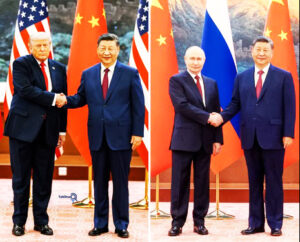
The United States, long accustomed to presenting itself as the principal architect of the international order, now faces an increasingly competitive geopolitical landscape. China continues expanding its global economic footprint. Russia remains an influential strategic actor despite sustained Western pressure. Meanwhile, organizations such as BRICS are seeking to increase their role in shaping an international system that is less dependent on Washington’s leadership.
Against this backdrop, critics argue that Trump’s administration has become increasingly isolated diplomatically.
For many observers, Trump’s Fear of Iran’s National Unity cannot be separated from this broader geopolitical environment. The combination of mounting international challenges abroad and the emergence of a highly mobilized Iranian society has created a strategic dilemma that differs fundamentally from previous confrontations.
The Psychology Behind Trump’s Strategic Deadlock
Viewed through the lens of political psychology, Trump’s Fear of Iran’s National Unity appears to be rooted in more than personal security concerns. Leaders often express heightened anxiety when they begin to recognize the long-term consequences of their own strategic decisions and perceive that their adversaries have identified their vulnerabilities.
Within this framework, two factors help explain Trump’s growing sense of insecurity.
First is what many observers describe as his delayed recognition of the power of national mobilization inside Iran. Second is the accumulation of strategic setbacks that, according to critics, have weakened America’s international standing and narrowed Washington’s room for maneuver.
For decades, successive U.S. administrations relied heavily on military superiority, economic sanctions, and political pressure as primary instruments of foreign policy. Yet, according to supporters of the Iranian government’s position, Iran has responded with a level of public solidarity that complicates traditional calculations of deterrence.
Rather than confronting only government institutions, any potential military confrontation would involve a society that portrays itself as willing to defend national infrastructure, sovereignty, and territorial integrity alongside state institutions.
From this perspective, Trump’s Fear of Iran’s National Unity reflects the realization that military pressure alone cannot easily overcome a population demonstrating strong internal cohesion.
Supporters of this interpretation argue that any escalation against such a society could produce consequences extending far beyond conventional military objectives, potentially generating broader political, diplomatic, and strategic costs.
At the same time, critics contend that Trump’s broader foreign policy record has left the United States facing a series of increasingly difficult geopolitical realities. Regional conflicts have proven more complex than anticipated, strategic competitors have expanded their influence, and Washington’s ability to shape international outcomes has become increasingly contested.
Against this backdrop, concerns about personal security may be interpreted not simply as fear of physical harm but as an acknowledgment of mounting political and strategic consequences.
Conclusion
Whether one agrees with this interpretation or not, the debate surrounding Trump’s Fear of Iran’s National Unity highlights a broader discussion about the relationship between domestic cohesion and geopolitical power.
For supporters of Iran’s current political trajectory, the country’s greatest strategic asset lies not only in its military capabilities but in the perception of national unity displayed during periods of external pressure. They argue that this collective solidarity has altered strategic calculations in ways that conventional military assessments often fail to capture.
Conversely, critics of Trump’s foreign policy maintain that growing diplomatic isolation, strained alliances, and shifting global power dynamics have weakened America’s strategic position while increasing uncertainty surrounding its international leadership.
Within this narrative, Trump’s repeated references to threats against his own life are presented not as demonstrations of strength but as symptoms of a broader strategic impasse. According to this viewpoint, the greatest challenge facing Washington is no longer military capability alone, but the difficulty of confronting a society portrayed as politically mobilized and united around national sovereignty.
Ultimately, Trump’s Fear of Iran’s National Unity serves as the central theme of this analysis: the argument that national cohesion can become a strategic force capable of influencing geopolitical calculations as profoundly as military power or economic leverage.
Ayesha Babrak Khel