Endless Wars, Endless Failures
Simon Tisdall, a foreign affairs commentator, writes in The Guardian that five years after the chaotic withdrawal of US forces from Kabul, the NATO-backed invasion and occupation of Afghanistan—launched following the September 11, 2001, terrorist attacks on New York and Washington D.C.—is now widely regarded as a failure. The campaign cost the lives of over 2,400 US troops, 450 British soldiers, and tens of thousands of civilians (the exact figure remains unknown). Although Al-Qaeda terrorists were defeated, the Taliban—their hosts—re-established their rule after seizing power in 2021.
Afghanistan became a prime example of ill-conceived Western interventionism and nation-building. It was the archetype of the “forever war,” a term first coined during the Vietnam War. This cautionary tale could have served as a deterrent for politicians and generals tempted to rush into conflicts without just cause, clear and achievable objectives, or an exit strategy.
Unfortunately, the lesson of the “forever war” had to be relearned in Iraq, which the US and UK invaded in 2003, only to withdraw in 2011 after inflicting massive damage for negligible gain. At the time—and ever since—the impassioned cry of “Never again!” has been repeatedly voiced.
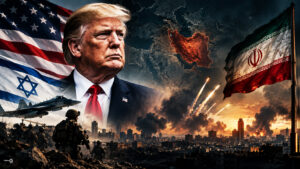
And yet, that same disastrous pattern appears to be repeating itself following Donald Trump’s incomprehensible and foolish decision to attack Iran. The war—which he dubbed a “little excursion”—is entering its sixth month and escalating rapidly. This conflict, too, feels like a “forever war.” There is no logic that can justify this nightmare happening all over again. How is such a thing possible?
Endless Wars, A Repetitive pattern
For more than two decades, the United States has repeatedly turned to military power in the Middle East, often promising that another war, another bombing campaign or another show of force would produce a safer and more stable region. Yet the history of Iraq, Afghanistan, Syria, Yemen and now Iran raises a difficult question: what happens when military power becomes a strategy rather than a tool?
Donald Trump returned to the White House promising to avoid the mistakes of previous administrations and present himself as a leader who could end wars rather than start them. Instead, in February 2026, the United States joined Israel in launching a major military campaign against Iran. More than six months later, the conflict continues.
The result is a war that has consumed enormous financial and military resources, disrupted global energy markets, placed American forces under pressure and left Washington without a clear political endgame. For critics of Trump’s foreign policy, this looks less like a break from America’s era of “forever wars” and more like another chapter in it.
Trump and Iran War: From Threats to Direct Military Action
The Trump administration has presented the war against Iran primarily as a response to concerns over Iran’s nuclear and missile capabilities. The United States and Israel launched their joint attacks on February 28, 2026, triggering Iranian retaliation against Israel, Gulf states hosting U.S. forces and American military positions in the region. The administration initially appeared to expect a relatively short conflict. But the war has lasted far longer than those early expectations.
By late August, the Associated Press reported that U.S. objectives had evolved significantly. The initial emphasis was on Iran’s nuclear and missile capabilities. Increasingly, however, Washington’s attention had shifted toward reopening the Strait of Hormuz, a vital global energy route that had become heavily disrupted by the conflict.
Some U.S. military objectives were achieved. American and Israeli forces inflicted substantial damage on Iranian military infrastructure, including parts of its air force, navy and air-defense systems. But battlefield destruction is not the same thing as strategic success.
Iran’s missile capabilities remained, its enriched uranium stockpile had not been recovered, and efforts to negotiate a new nuclear agreement had collapsed. The war also continued without a clear political settlement.
What Has the United States Actually Achieved?
This is where the debate over the Trump and Iran War becomes more complicated. Supporters of the campaign can point to significant military achievements. Iranian military infrastructure has been damaged, and Washington has demonstrated that it can project enormous force against Iran.
But the more important question is what those achievements have produced.
Has Iran been permanently removed as a regional power?
Has its nuclear question been permanently resolved?
Has the Strait of Hormuz been secured without creating another source of instability?
Has the war produced a sustainable political agreement?
And most importantly, has the United States created a clearer and more stable Middle East?
As of September 2026, the answers remain uncertain.
The financial price, meanwhile, is no longer theoretical. A Congressional Budget Office estimate reported by the Associated Press put the Department of Defense’s cost of the war at more than $38 billion by August 1, with costs potentially continuing at roughly $3 billion per month depending on the intensity of fighting. A separate U.S. Central Command estimate placed the cost at $43.6 billion as of September 3.
The war has also placed pressure on U.S. military inventories and contributed to higher energy costs. So, the central question is not whether American weapons can destroy targets.
The Israel Factor in Trump’s Middle East Strategy
One of the most controversial aspects of the conflict is the relationship between Washington’s interests and Israel’s security priorities. It would be simplistic to claim that Trump entered the war only because Israel wanted him to. The Trump administration has publicly offered its own rationale, particularly concerning Iran’s nuclear and missile programs.
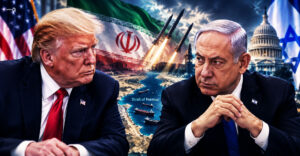
But it is equally difficult to ignore the depth of U.S.-Israeli strategic coordination. The February 2026 offensive was launched jointly by the United States and Israel. Months later, Trump and Israeli Prime Minister Benjamin Netanyahu continued to discuss military, diplomatic and economic options concerning Iran. Reuters reported that the two leaders had examined a range of options, including diplomacy, economic pressure and military action, while describing Washington as the senior partner in the relationship.
This raises an uncomfortable question for American foreign policy:
Did Washington enter another Middle Eastern war because it represented a clearly defined and achievable American interest—or did its deep strategic alignment with Israel help pull the United States into a conflict whose consequences were far more difficult to control?
That question deserves serious debate. A superpower should be able to support an ally while still defining its own strategic interests. Otherwise, partnership can gradually become strategic dependency.
From “America First” to Another Middle Eastern War
There is an obvious contradiction between Trump’s political image and the realities of the Iran conflict. Trump campaigned on promises to avoid unnecessary foreign wars. In December 2024, for example, he argued that the United States should stay out of the Syrian conflict, calling it “not our fight.” Yet his second administration is now managing one of the most consequential U.S. military conflicts in the Middle East in decades.
Reuters has explicitly compared Trump’s Iran campaign with the post-9/11 wars in Afghanistan and Iraq, noting that Trump’s campaign rhetoric had portrayed him as a “president of peace” who would stop foreign wars. The report also highlighted concerns over the absence of a clear exit strategy.
That contradiction is difficult to ignore. The names of the countries may change. The presidents may change. The weapons may become more sophisticated. But the pattern can remain remarkably familiar:
A threat is identified. Military force is presented as necessary. Initial victories are announced. The conflict becomes more complicated. The objectives expand or change. The costs increase. And eventually, Washington is left searching for a way out.
The Ghosts of Iraq and Afghanistan
The United States has learned some painful lessons from Iraq and Afghanistan, but the question is whether it has learned enough. Those wars demonstrated that overwhelming military superiority does not automatically translate into political control, legitimacy or long-term stability.
Afghanistan is perhaps the clearest example. The United States and its allies possessed extraordinary military capabilities, yet after two decades of war, the Taliban returned to power following the collapse of the Afghan Republic in 2021. The lesson is not that American military power is meaningless. It is that military power has limits.
The United States can defeat armies, destroy infrastructures and dominate the skies. But political outcomes are shaped by local societies, regional powers, ideology, economics and the ability of governments to survive after the bombs stop falling.
Iran is not Afghanistan. It is not Iraq. Its geography, population, military capabilities and regional networks make the strategic environment fundamentally different. That is precisely why another prolonged war should have demanded an exceptionally clear political endgame.
A War Without a Clear Exit
One of the most troubling features of the Iran conflict is how the definition of success appears to have changed over time. The initial emphasis was heavily focused on Iran’s nuclear and missile capabilities. Later, controlling or reopening the Strait of Hormuz became a central concern.
That shift is important because it illustrates one of the classic dangers of prolonged military campaigns: the war begins with one objective and continues because new problems are created by the war itself.
Iran’s response to the campaign disrupted shipping through the Strait of Hormuz, a route responsible for a major share of global oil transportation. The resulting pressure has affected energy markets far beyond the Middle East. Washington is therefore facing a problem that did not simply exist before the war: how to deal with the consequences of a conflict that it helped initiate.
This is how wars become difficult to end. Every new military action creates another reaction. Every reaction creates another justification for military action. And the cycle continues.
The Cost at Home
Wars are not fought only on battlefields. They are paid for by taxpayers, measured in military casualties and felt through fuel prices, inflation and political pressure.
By September, the financial burden of the Iran war had become a major domestic issue. Reuters reported that the conflict and its impact on oil supplies and fuel prices were hurting the Republican Party politically, while Trump’s approval rating in a September Reuters/Ipsos poll stood at 35%, only slightly above the record low of 33% recorded in August.
More importantly, Americans have not demonstrated overwhelming support for the war itself. A Reuters/Ipsos poll in August found that only 31% of Americans supported U.S. military action against Iran, while 83% expected the conflict to become prolonged.
That should matter to any president. Foreign policy is not separated from domestic reality forever. When a war becomes expensive, prolonged and difficult to explain, public patience can disappear quickly. And that is particularly significant for a president who built much of his political identity around challenging Washington’s traditional foreign-policy establishment.
America’s Image Is Also Paying a Price
The costs of war are not limited to dollars and casualties. There is also the question of America’s position in the world. The United States has spent decades building alliances, military partnerships and diplomatic influence. But military intervention can also weaken the credibility that diplomacy depends upon, particularly when allies and partners disagree with Washington’s decisions.
As Trump returns to the United Nations amid the continuing Iran war, Reuters reported that he faces a skeptical international audience, with the conflict contributing to diplomatic tensions, military strain and economic disruption.
The broader international picture is also changing. A September 2026 Reuters/Ipsos global survey covering more than 35,000 people in 34 countries found that only 39% said they were comfortable with the United States leading global affairs, while 37% expressed the same view about China. A majority supported greater international cooperation.
These numbers do not prove that America’s global influence is disappearing. But they do show that American leadership cannot be taken for granted. Military power can compel, but it cannot automatically persuade.
Endless Wars, Endless Failures?
Perhaps the most important lesson from the Trump and Iran War is not about Iran at all. It is about the limits of military power. The United States remains the world’s most powerful military force. Nothing about the Iran conflict changes that basic reality. But power is not the same as strategy.
A country can win individual battles and still struggle to achieve its political objectives. It can destroy military facilities and still fail to produce a durable settlement. It can spend tens of billions of dollars and still be unable to explain exactly what the final peace should look like.
That is the uncomfortable legacy of America’s long involvement in the Middle East. And it is why the title “Endless Wars, Endless Failures” is not simply a description of individual battles. It is a question about strategy.
What is the purpose of another war?
What does victory actually mean?
Who decides when the war is over?
And what happens after the bombing stops?
These questions were relevant in Iraq. They were relevant in Afghanistan. They were relevant in Syria and Yemen. And they are now relevant to Iran.
Conclusion: America Needs an Exit Strategy, Not Another War
The United States does not lack military power. It may, however, face a more difficult challenge: knowing when military power cannot solve the problem in front of it. Trump’s Iran war has already demonstrated the enormous costs of entering a conflict with objectives that can evolve faster than the battlefield itself. More than six months into the war, Washington has achieved significant military destruction, but the broader political outcome remains unresolved.
That should force a larger conversation in Washington. America’s security cannot be measured only by the number of targets destroyed. Its success should also be measured by whether wars actually produce lasting political solutions, whether American lives and resources are being used toward clearly defined objectives, and whether military action leaves the United States more secure or simply creates another crisis to manage.
The United States has spent decades demonstrating that it can win wars on the battlefield. The harder challenge is proving that it can end them. And if the lesson of Iraq, Afghanistan and now Iran is that every new war creates another set of problems, then perhaps the real strategic failure is not losing a war. It is repeatedly starting one without knowing how to finish it.
Mohsen Shahrafiee