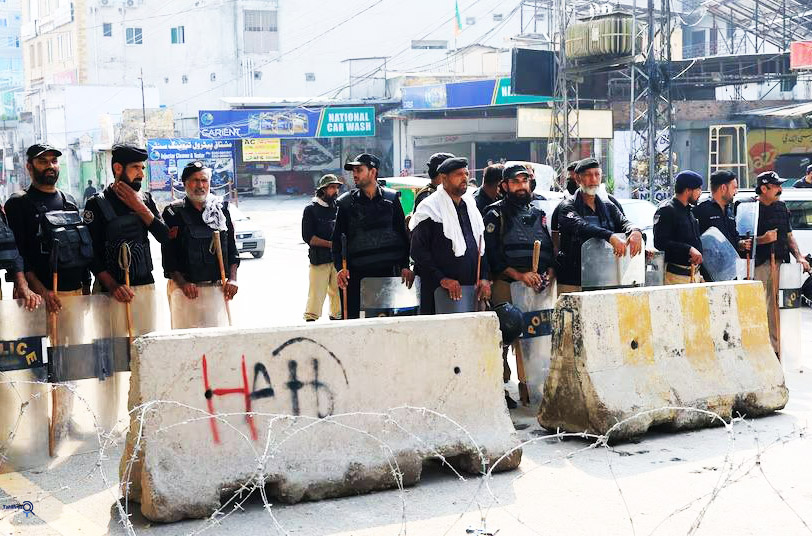
Pakistan is once again facing a test whose consequences could extend far beyond a political dispute, affecting the balance of power, the future of democracy and the region’s security dynamics. The declaration of an emergency in Khyber Pakhtunkhwa, the arrest of Sohail Afridi and the transfer of responsibility for administering the province to a governor backed by the federal government have created a series of interconnected developments that cannot be explained solely by citing security concerns.
According to Islamabad’s official narrative, the central issue is the provincial government’s inability or failure to combat terrorism. Critics of the federal government, however, view the move through the lens of political divisions, party competition and efforts to restrict the opposition. Concerns raised by human rights organizations, alongside protests from political and religious figures, suggest that the debate is not merely about how to confront armed groups. It also concerns the legitimacy of the instruments the state uses to exercise its authority.
The fundamental question is whether the emergency in Khyber Pakhtunkhwa is a measure intended to contain insecurity or whether it could become a tool for shifting the balance of power, restricting political opponents and initiating a new phase of security-driven political engineering in Pakistan.
Khyber Pakhtunkhwa: From Counterterrorism to a Struggle for Power
To understand the implications of Islamabad’s decision to declare an emergency in Khyber Pakhtunkhwa, it is necessary to examine Pakistan’s power structure and the province’s distinct position within it. Pakistan’s current federal government is led by the Pakistan Muslim League-Nawaz (PML-N), with the Pakistan Peoples Party (PPP) as a coalition partner. Both parties play decisive roles in the country’s political power structure.
In contrast, Pakistan Tehreek-e-Insaf (PTI), led by imprisoned former prime minister Imran Khan, remains a major opposition force. Khyber Pakhtunkhwa is the party’s most important provincial stronghold. Suspending the provincial government under these circumstances is therefore more than an administrative change. It effectively removes PTI’s last major centre of executive power at the provincial level.
The timing of the federal government’s decision is particularly significant. The suspension of the provincial government amid escalating protests raises the question of whether security concerns alone explain the move or whether the political crisis has also played a role in shaping it. The federal government argues that the provincial administration has failed to combat terrorism and has not provided the necessary cooperation in confronting armed groups.
Pakistani officials have also accused PTI of adopting a sympathetic approach towards the Afghan Taliban and Tehreek-e-Taliban Pakistan (TTP), allegations that PTI rejects. Whatever the competing claims, one observable fact is that Islamabad has made security a central justification for its intervention in the provincial government.
Behind this confrontation lies the longer-standing question of the concentration of power in Pakistan. Within Pakistan’s political system, political elites based in Punjab and Sindh wield considerable influence. Khyber Pakhtunkhwa, a province with a Pashtun majority, has a distinct political identity, historical experience and geographical position.
Nevertheless, the current dispute should not be reduced to a simplistic narrative of uniform hostility between the people of Punjab and Sindh, on the one hand, and Pashtuns, on the other. Political parties, state institutions and social groups in each of these regions hold diverse views.
The central issue is that the federal government, facing powerful political opponents, has now assumed control over the administration of a province of strategic importance to PTI. Khyber Pakhtunkhwa Governor Faisal Karim Kundi belongs to the PPP, and responsibility for administering the province has been assigned to him and an advisory council. Even if the decision was intended to improve security coordination, its practical effect is to shift the balance of power in favor of the federal government.
From this perspective, the emergency in Khyber Pakhtunkhwa must be examined on two levels. The first concerns the need to confront armed threats; the second concerns the impact of the same measures on political competition.
If the federal government has genuinely concluded, on the basis of documented evidence, that the provincial administration is incapable of combating terrorism, it should present that evidence through lawful procedures and to the relevant oversight institutions. However, if security measures are used to restrict a political rival with an electoral support base, the distinction between ensuring security and suppressing political competition becomes dangerously blurred.
A Warning Sign for Democracy: Human Rights Concerns and Religious Leaders’ Opposition
The declaration of an emergency in Khyber Pakhtunkhwa has, unfortunately, affected not only security but also citizens’ political rights and the independence of elected institutions. The Human Rights Commission of Pakistan has expressed concern about the consequences of the move, warning of the risks of heightened political tensions and the weakening of democratic processes.
These concerns matter because extraordinary measures, even when introduced on security grounds, can lead to broader restrictions on political activity, public protests and scrutiny of government conduct.
Opposition to the decision has also extended beyond PTI. Maulana Fazlur Rehman, leader of Pakistan’s Jamiat Ulema-e-Islam, has described the federal government’s decision as an attack on democracy and the rights of the people. He has accused the government of reneging on commitments made during negotiations and said his party would oppose the decision through political, parliamentary and judicial channels.
His position is significant because criticism of the emergency has not come exclusively from Imran Khan’s party. A prominent religious and political figure has also challenged the government’s handling of the crisis.
The political objections centre on a fundamental question: can a government suspend an elected provincial administration, arrest senior officials and transfer responsibility for governing the province to federal representatives in the name of security without establishing a dangerous precedent for Pakistan’s federal system?
The answer depends not merely on the government’s stated intentions but also on compliance with the law, the proportionality of the measures to the threat, the availability of judicial and parliamentary oversight, and the duration of the emergency.
Under Article 232 of Pakistan’s Constitution, a state of emergency may be proclaimed in circumstances involving war, external aggression or internal disturbance beyond a provincial government’s capacity to control. The article also establishes specific conditions for an emergency arising from internal disturbance, including requirements concerning a resolution by the provincial assembly.
Article 234 provides a separate constitutional basis for intervention in the administration of a province when its government cannot function in accordance with the Constitution. A legal assessment of the recent action therefore requires careful examination of the specific constitutional basis invoked by each order and whether the relevant requirements have been met.
This raises a serious concern: if political disagreements are met with emergency rule and the arrest of opposition leaders, will meaningful dialogue remain possible?
Political experience in different countries suggests that removing a rival from executive office does not necessarily eliminate that rival’s social support base. In some circumstances, such measures can deepen feelings of political exclusion and transform scattered protests into a broader confrontation.
The people of Khyber Pakhtunkhwa have the right to security, freedom of movement and a normal life. The federal government, meanwhile, has a responsibility to confront genuine threats. But lasting security depends on counterterrorism efforts grounded in credible evidence, institutional cooperation, public support and legal accountability—not on turning a security crisis into an instrument for settling political disputes.
Emergency in Khyber Pakhtunkhwa: Insecurity, Instability and an Uncertain Future
The most significant consequences of the emergency in Khyber Pakhtunkhwa may emerge not in the first few days but over the coming months. The federal government now has an opportunity to reshape the province’s administrative structure, the coordination of security forces and relations between local officials and the central government.
The issue, therefore, is not simply who occupies the provincial government offices. It is who will make decisions about security, military operations, the administration of sensitive areas and engagement with local communities.
Because Khyber Pakhtunkhwa borders Afghanistan and faces activity by armed groups, it presents a complex security environment. Any reorganization of security arrangements in such a region will have consequences beyond Pakistan’s domestic politics, potentially affecting relations with Afghanistan and the situation of communities living along the border.
One concern is that the emergency in Khyber Pakhtunkhwa could become more than a limited, temporary measure to address a specific threat. It could mark the beginning of a broader policy aimed at redefining the power structure in strategically sensitive regions.
Under such a scenario, an opposition-led provincial government could first be suspended, followed by pressure on its political and administrative networks. Security and administrative changes could then extend to other areas. This makes it essential for oversight institutions and the public to scrutinize the scope and objectives of the intervention.
The potential consequences for Afghanistan must also be considered. Islamabad has repeatedly accused Kabul of allowing anti-Pakistan armed groups to operate from Afghan territory, allegations that the Afghan Taliban government has rejected. With the federal government exercising greater direct control over Khyber Pakhtunkhwa, the possibility that domestic decisions could become intertwined with border policy and increased pressure on Afghanistan also deserves attention.
Ultimately, the Pakistani government must clarify the precise objectives of the emergency in Khyber Pakhtunkhwa, the criteria by which its success will be measured and the conditions under which extraordinary powers will end.
If terrorism is the central problem, success should be reflected in fewer attacks, better protection for civilians, stronger security cooperation and a return to normal life—not merely in the arrest of political opponents or the replacement of local administrators.
Naqibullah Jamshid