The possibility of the United States using the so-called “Mother of All Bombs” (MOAB) in a renewed military confrontation with Iran has raised serious questions about the humanitarian consequences of another escalation in the Middle East. Beyond its enormous destructive power, the weapon carries a troubling history, particularly in Afghanistan, where a US strike in 2017 left behind widespread destruction and long-lasting concerns among local communities.
As Washington once again raises the prospect of deploying this exceptionally powerful conventional bomb against Iran, the experience of Afghanistan serves as a stark reminder that the consequences of such military operations do not necessarily end when the explosions subside. Civilian communities, agricultural land, water resources, and the surrounding environment can remain affected long after military operations have concluded.
At the same time, the renewed emphasis on the MOAB raises another important question: Is Washington genuinely preparing for another military escalation, or is the threat primarily intended to intimidate Tehran and force it to accept American demands?
Iran’s response suggests that such threats are unlikely to produce the political submission Washington seeks. Instead, they risk reinforcing an already dangerous confrontation in which the consequences could extend far beyond the immediate battlefield.
Afghanistan’s Experience: The Human Cost of the Mother of All Bombs
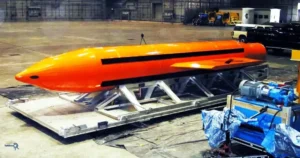
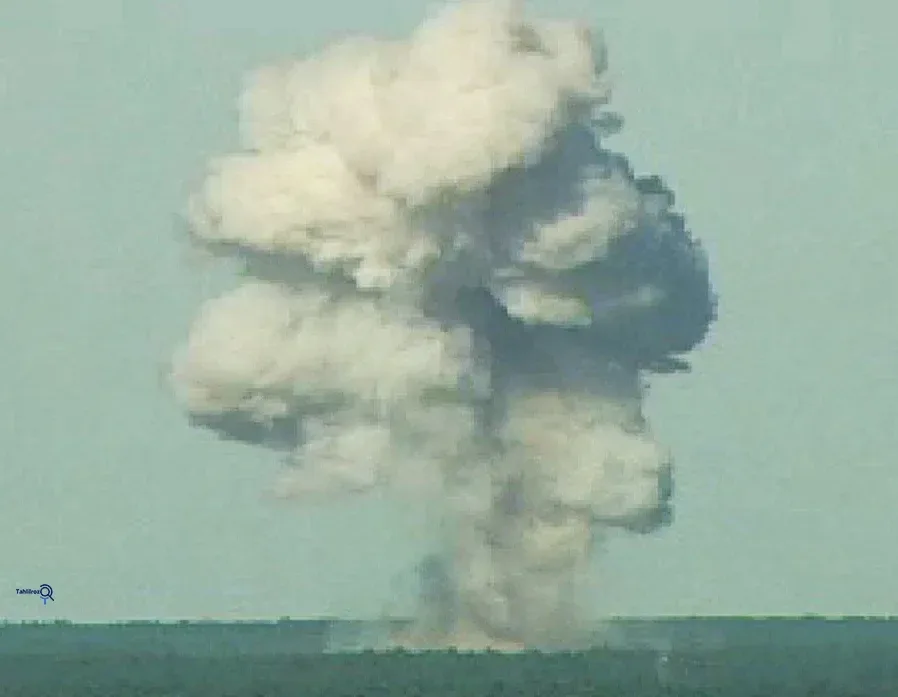
The history of the Mother of All Bombs is closely associated with its first operational use in Afghanistan. On April 13, 2017, US forces dropped a GBU-43/B Massive Ordnance Air Blast bomb on an underground complex attributed to the Islamic State’s Khorasan branch (ISIS-K) in Nangarhar province. Weighing approximately 9.8 metric tons and measuring more than nine meters in length, the bomb was deployed from a C-130 military aircraft.
Washington described the operation as an attempt to destroy ISIS-K positions, underground tunnels, and military infrastructure. Afghan officials subsequently reported that 94 members of the group had been killed.
However, the consequences of the strike extended beyond the military objectives announced by the United States. Local residents reported extensive destruction in surrounding areas, including damage to homes, agricultural land, and water resources. Questions also remained about the full extent of civilian and environmental damage.
For communities living near the affected area, the bombing represented more than a single military operation. The destruction of local infrastructure and natural resources created concerns that continued long after the attack.
The Afghanistan experience therefore provides an important lesson: the destructive consequences of exceptionally powerful conventional weapons cannot be measured exclusively by the number of combatants reportedly killed or military facilities destroyed. When such weapons are used, the surrounding civilian environment can also become part of the battlefield.
Why Is Trump Raising the Possibility of Using MOAB Against Iran?
Recent American media reports have brought the possibility of using the GBU-43/B against Iran back into public discussion. Citing a CNN report, Reuters reported that the US military had examined options for striking Iranian energy infrastructure and nuclear facilities, including the potential use of the Mother of All Bombs. Reuters also noted that it could not independently verify the report.
This distinction is important. The consideration of a military option does not mean that an order to use the weapon has been issued. Nevertheless, publicly discussing such an option during an already volatile confrontation carries an unmistakable political message.
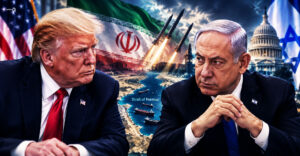
Donald Trump has repeatedly used strong language when discussing America’s military capabilities and potential actions against Iran. By highlighting the possibility of deploying one of the largest conventional bombs in the US arsenal, his administration can seek to project military superiority and increase pressure on Tehran.
Yet the strategy also raises questions about the actual objectives behind such statements.
If the purpose is to demonstrate American military power, the threat may serve a political and psychological function. If the objective is to force Iran into accepting Washington’s demands, however, the strategy could prove considerably less effective. Military intimidation and political capitulation are not necessarily the same thing.
MOAB: An Enormous Explosion, but Not an Unlimited Weapon
The GBU-43/B MOAB is among the largest conventional bombs ever developed by the United States. Unlike nuclear weapons, its destructive power comes from a massive conventional explosive payload and the enormous blast wave generated upon detonation.
Its principal characteristics include:
- Weight: Approximately 9.8 metric tons.
- Length: More than nine meters.
- Explosive payload: Approximately 8.5 metric tons.
- Deployment: Designed to be delivered by a specialized transport aircraft.
- Guidance: Uses satellite navigation and a guidance system to reach its intended target.
The weapon is designed to produce an exceptionally powerful explosion and widespread blast effects. However, its enormous size should not be confused with an unlimited ability to destroy every type of military installation.
Can MOAB Destroy Iran’s Underground Nuclear Facilities?
One of the most important limitations of the Mother of All Bombs concerns its effectiveness against deeply buried and heavily fortified facilities. The GBU-43/B is primarily designed to generate a massive blast wave rather than penetrate deep layers of reinforced concrete and rock. This makes it fundamentally different from specialized earth-penetrating weapons such as the GBU-57 Massive Ordnance Penetrator.
Consequently, the existence of a powerful conventional bomb does not automatically mean that it can destroy deeply buried nuclear facilities. Iran’s underground military and nuclear infrastructure presents a different engineering challenge from the caves and tunnels targeted in Afghanistan in 2017.
This distinction is particularly important because the political presentation of American military capabilities can create an exaggerated impression of what a particular weapon can actually accomplish. The Mother of All Bombs is extraordinarily destructive, but it is not a universal solution to every military target.
The Humanitarian and Environmental Consequences Cannot Be Ignored
The possibility of using MOAB against Iran should be examined first and foremost through its potential humanitarian consequences. Even when a military operation is directed at a specific installation, the surrounding population and civilian infrastructure can face serious risks. The massive pressure wave, flying debris, and destruction of nearby structures can threaten communities beyond the intended target.
The potential effects become even more concerning when military operations take place near populated areas or critical infrastructure. Damage to water systems, electricity networks, agricultural land, and other essential facilities can create consequences that persist for months or years. Such destruction can also place additional pressure on healthcare services, emergency responders, and local communities. There is also a fundamental question of international humanitarian law.
Under international humanitarian law, parties to an armed conflict must distinguish between military objectives and civilians, avoid indiscriminate attacks, and ensure that anticipated civilian harm is not excessive in relation to the concrete and direct military advantage expected.
The use of an exceptionally powerful conventional weapon is not automatically unlawful in every circumstance. However, its use must meet these legal requirements, including the principles of distinction, proportionality, and precaution.
A weapon’s enormous destructive capacity makes these obligations particularly important. The experience of Afghanistan should therefore serve as a warning against treating the potential deployment of MOAB as merely another military option.
Trump’s Threats and the Strategy of Psychological Warfare
Trump’s public emphasis on America’s most powerful conventional weapons can also be interpreted as part of a broader strategy of psychological pressure against Iran. By repeatedly highlighting the possibility of devastating military action, Washington seeks to influence Tehran’s calculations before any new confrontation begins. The underlying assumption is that the prospect of overwhelming destruction could persuade Iranian leaders to reconsider their position and make concessions.
However, this approach overlooks an important feature of Iran’s political and military response to external pressure. For years, Iran has faced sanctions, military threats, diplomatic isolation, and repeated warnings of possible attacks. These pressures have not automatically translated into the concessions sought by Washington.
In fact, repeated threats can sometimes produce the opposite reaction, strengthening domestic resistance and reinforcing the argument that national security requires greater military preparedness.
Trump may believe that demonstrating the destructive potential of American weapons will strengthen his negotiating position. But threatening to inflict enormous damage does not necessarily create the political conditions required for a successful diplomatic agreement.
More importantly, the credibility of military threats depends not only on the weapons available but also on the ability to achieve meaningful strategic objectives without triggering consequences that outweigh the expected gains.
Iran’s Response: Threats Will Not Determine the Outcome
Iranian officials have responded to discussions about the possible deployment of MOAB by emphasizing that the name, size, or destructive capacity of an American bomb cannot determine the outcome of a confrontation.
General Majid Ebn-ol-Reza, who served as defense minister in the interim government, argued in a post on X that the consequences of any American military action should be assessed across strategic, economic, and political dimensions rather than through the technical specifications of individual weapons. He also pointed to Iran’s missile capabilities and their implications for the regional balance of power.
IRGC spokesperson General Hossein Mohebbi offered a different response, criticizing the designation “Mother of All Bombs” and arguing that using the sacred term “mother” to describe such a destructive weapon reflected a barbaric approach to warfare.
Mohsen Rezaei, Secretary of the Supreme National Security Council, also warned that Iran’s operational approach in a renewed confrontation would not necessarily follow the expectations or calculations of its adversaries.
Iran has also reportedly raised its concerns with the United Nations over the possibility of using the weapon. Taken together, these statements reflect Tehran’s attempt to counter the psychological impact of American military threats by emphasizing the broader costs of escalation.
Iran’s position is that a military confrontation cannot be evaluated solely through the destructive capacity of American weapons. The potential consequences for regional security, energy markets, military infrastructure, and the wider strategic balance must also be considered.
Why Military Intimidation May Fail Against Iran
The fundamental problem with Trump’s approach is that military superiority does not automatically translate into political success. The United States possesses an overwhelming conventional military advantage over Iran. However, the strategic consequences of a conflict cannot be determined solely by comparing aircraft, bombs, and military budgets.
Iran’s geography, missile capabilities, military infrastructure, and ability to impose costs across the region are all important factors in any calculation involving a renewed confrontation. Iran has repeatedly indicated that it will respond to military aggression rather than accept demands imposed through threats. Its position reflects a broader deterrence strategy intended to convince Washington that the costs of escalation could be substantial.
This does not mean that Iran is immune to military damage or that a conflict would not have devastating consequences for the country. Rather, it means that the prospect of inflicting enormous destruction does not guarantee that an adversary will surrender politically. The Afghanistan experience offers another important lesson: even the deployment of an exceptionally powerful weapon does not necessarily translate into a lasting strategic victory.
Conclusion: The Mother of All Bombs Cannot Guarantee a Political Victory
The renewed discussion surrounding the possible use of the Mother of All Bombs against Iran represents a dangerous escalation in the language of military confrontation. The experience of Afghanistan demonstrates that the destructive consequences of such weapons can extend far beyond their intended targets, leaving civilian communities and the surrounding environment exposed to lasting damage.
Trump may view the threat as an effective instrument for intimidating Tehran and strengthening Washington’s negotiating position. But Iran has repeatedly demonstrated that military threats alone are unlikely to determine its political decisions. Its response has emphasized deterrence, national resistance, and the strategic costs that any renewed confrontation could impose on the United States and its regional allies.
Ultimately, the question is not simply whether Washington possesses a bomb powerful enough to devastate a target. It is whether the use of such a weapon could achieve a meaningful political objective without creating an even greater humanitarian and strategic crisis. No military threat, regardless of its destructive potential, can guarantee that outcome.
The Mother of All Bombs may demonstrate the destructive power of American military technology, but it cannot manufacture political submission or guarantee victory over a nation determined to resist external pressure.
Mohsen Shahrafiee