Trump and Iran War
On November 3, the United States witnessed an event whose significance went far beyond the redistribution of a few seats in Congress. In a country whose leaders are accustomed to shaping the fate of other nations through sanctions, threats and bombardments, millions of Americans this time went to the ballot box to decide their own political future.
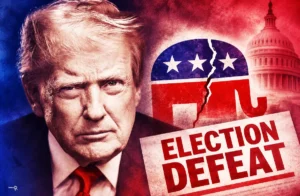
The result was a sweeping defeat for the Republican Party. Democrats secured majorities in both the House of Representatives and the Senate. In states once considered reliable conservative strongholds, candidates backed by Donald Trump lost their races. Trump himself was not on the ballot, but few doubted that his policies were being put to the test. The man who had come to power two years earlier promising to make America great again was now facing a country in which a significant number of voters were no longer willing to bear the cost of his ambitions.
But understanding this defeat requires looking beyond Washington. We must begin across the ocean, in the Middle East—with Iran, the Strait of Hormuz and a war that was supposed to demonstrate American power but instead became one of the factors eroding it.
Trump and Iran War; A War That Was Supposed to Bring Victory
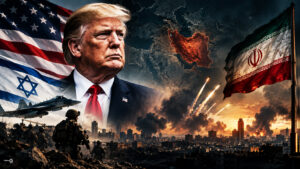
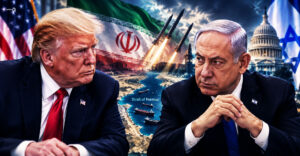
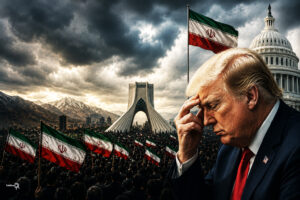
On February 28, 2026, the United States and Israel launched a brutal military assault on Iran, killing and injuring thousands of innocent people. Missiles were fired. Cities were targeted. But Iran retaliated, and the Persian Gulf became one of the most dangerous regions for the global economy.
At the beginning of every war, politicians tend to speak about military capabilities, the precision of weapons and technological superiority. Far fewer ask, in those first days, how a mother will cope with rising food prices, how a worker will manage as wages lose their purchasing power, or what happens to a family whose loved ones are buried beneath the rubble.
Trump, too, viewed the war through the lens of power. He believed American military might could shape the crisis according to the White House’s wishes. But war is not a living entity that obeys the commands of the US president. Once unleashed, its consequences can quickly move beyond his control.
Iran lies next to one of the world’s most important energy corridors. The Strait of Hormuz became a critical point where military decisions directly affected oil markets, shipping costs and the cost of everyday life. A war unfolding thousands of kilometers away from the United States gradually found its way into American homes. Not through missiles, but through the price of gasoline.
When Missiles Turned into Household Bills
Perhaps this is the most important part of the story behind Trump’s defeat. Americans did not vote solely on the issue of Iran. They voted on food prices, housing costs, their livelihoods, government corruption and the future of their country. But the war with Iran had become one of the factors connecting these sources of public discontent.
Someone in Washington or Texas who pays more for fuel, may never even have heard of some Iranian cities. But when war affects energy prices, foreign policy is no longer an abstract issue. It becomes a matter of food, income and family survival.
This is where military calculations collide with social realities. Trump wanted to keep the war confined to Iran’s geography. But its consequences crossed borders and eventually reached the American ballot box.
The Defeat of a Promise, Not Just a Party
Trump had won the support of a segment of the American public by promising to end endless wars and avoid new military adventures. He sought to distinguish himself from politicians who had entangled Washington in costly foreign conflicts.
In practice, however, his administration took the country into another war—one that continued for months without a clear end in sight. The contradiction was unmistakable. A president who spoke of ending wars was now presiding over a new one. A politician who had promised to reduce the cost of living was forced to explain the economic consequences of a major military conflict.
This contradiction created a political opportunity for his opponents. But its significance went beyond the rivalry between Democrats and Republicans. At stake was the credibility of political promises when measured against people’s everyday experiences.
For a time, political power can overcome its contradictions through propaganda, fiery speeches and televised displays of strength. But when citizens’ daily lives contradict the promises made by those in power, propaganda gradually loses its effectiveness.
The election results showed that Trump’s political coalition had been weakened. In a significant number of constituencies, voters who had trusted him two years earlier turned to opposition candidates. The defeat was not simply imposed on Trump by his opponents. His own policies had played a role in undermining his political support.
What Kabul Can See
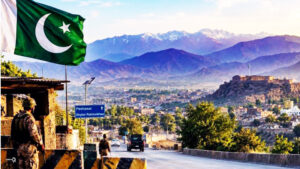
For the people of Afghanistan, images of American soldiers, promises of reconstruction, speeches about freedom and the chaotic withdrawal of foreign forces are not abstract concepts from political science textbooks. They are part of a generation’s lived history. Afghans know all too well how wide the gap can be between military victory and political success.
An army may control a country’s skies, bomb its cities and overthrow its government—although the United States did not even achieve that objective in Iran. But such capabilities do not necessarily translate into a lasting political order, public legitimacy or the achievement of strategic goals. Afghanistan is one of the clearest examples of this reality.
In 2001, the United States entered Afghanistan with overwhelming military power. Twenty years later, it withdrew from a country whose future looked vastly different from the picture American leaders had painted at the beginning of the war.
That history should have remained firmly in the memory of policymakers in Washington. Yet it seems that every new generation of American leaders is prepared to repeat the same old lessons at a new cost.
The President’s Admission and the Myth of Invincibility
After the elections, Trump acknowledged that the war with Iran had played a role in his party’s defeat. This admission carries political significance because it came from the very person who had made the decision to launch the attacks.
Yet he simultaneously defended that decision, saying that if he found himself in the same situation again, he would do the same thing. Here, we encounter a deeper contradiction: Trump accepts that one of his decisions contributed to his party’s electoral defeat, but refuses to reconsider whether that decision was right.
Trump remains president of the United States and retains considerable authority over foreign policy. The Democrats’ victory in Congress does not automatically mean the end of the war or the disappearance of his presidential powers. But it is no longer possible to claim that his policies enjoy the unconditional support of American society.
There is a significant difference between possessing power and having the consent of the people.
Trump has retained the power of the presidency, but the election has shown that, in the eyes of many voters, the political legitimacy of his policies has been eroded.
Conclusion: The Fire That Came Back to Its Master
History does not always change with the sound of explosions. Sometimes it changes in the silence of a polling station, as a few thousand votes are counted and the political course of an empire shifts.
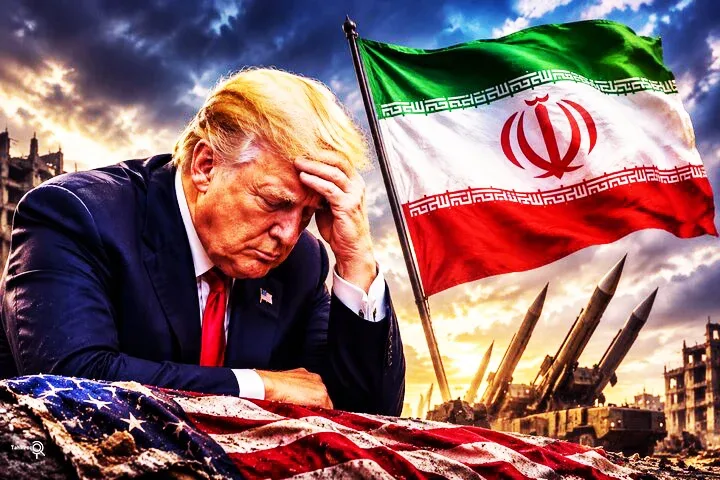
Trump wanted to consolidate American authority through a display of military power. Instead, the war with Iran became one of the factors weakening his political position. Rising living costs, declining trust in government and fears of a prolonged war all converged, producing an outcome that dealt a serious blow to the Republican Party.
The electoral defeat can therefore be seen as one of the major political consequences of the war with Iran—a conflict intended to showcase American power but which also exposed its limitations.
Perhaps the greatest lesson of this election is simple: A power capable of raining fire on another country’s territory cannot necessarily secure the support of its own people.
And what happened on November 3 was a reminder of precisely that truth—a truth written not in the speeches of the White House, but in the distance between the war in Iran and the ballot boxes of the United States.
Saeed Mohammadi